
If grass keeps dying in the same spot no matter what you try, the answer isn't more grass seed. It's a different plan altogether. The good news is that the spots where grass refuses to grow are often the easiest places to build something that actually looks great and needs almost no work once it's established. This guide walks you through how to figure out why grass is failing, what to put in its place, and exactly how to get it done.
Landscape Ideas Where Grass Won’t Grow: Practical Steps
Marcus Volkmann
24 Mar 2026
Diagnose why grass won't grow in your yard
Before you spend money on plants or materials, you need to know what you're actually dealing with. I've seen homeowners install beautiful ground covers only to watch them fail for the exact same reason the grass did. The cause matters.
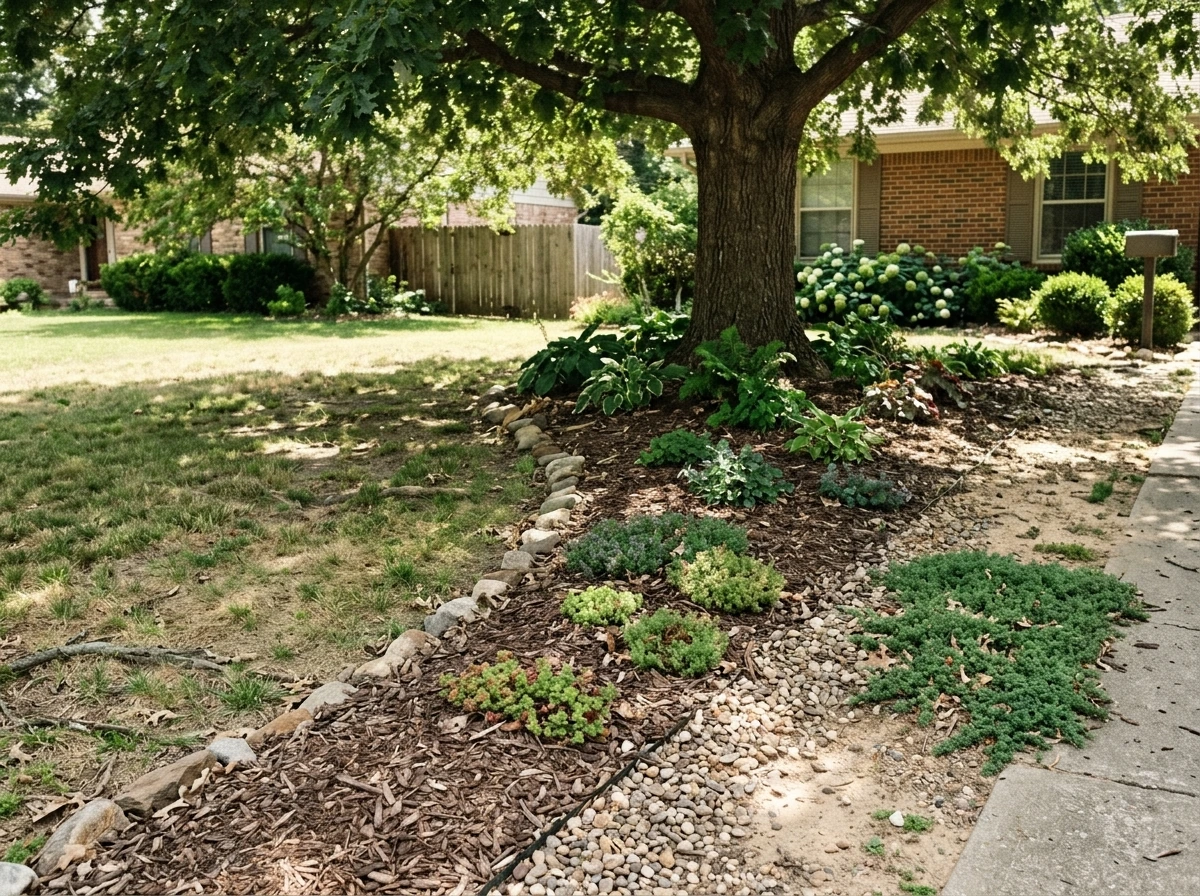
The most common culprits fall into a few clear categories. Shade is the big one. Grass needs a minimum of 4 hours of direct sun per day even for shade-tolerant varieties, and under a dense tree canopy you often get far less than that. Tree roots also compete aggressively for water and nutrients, which is a double problem. If you're dealing with a shaded area under trees, that combination of low light and root competition is almost impossible to overcome with turf alone.
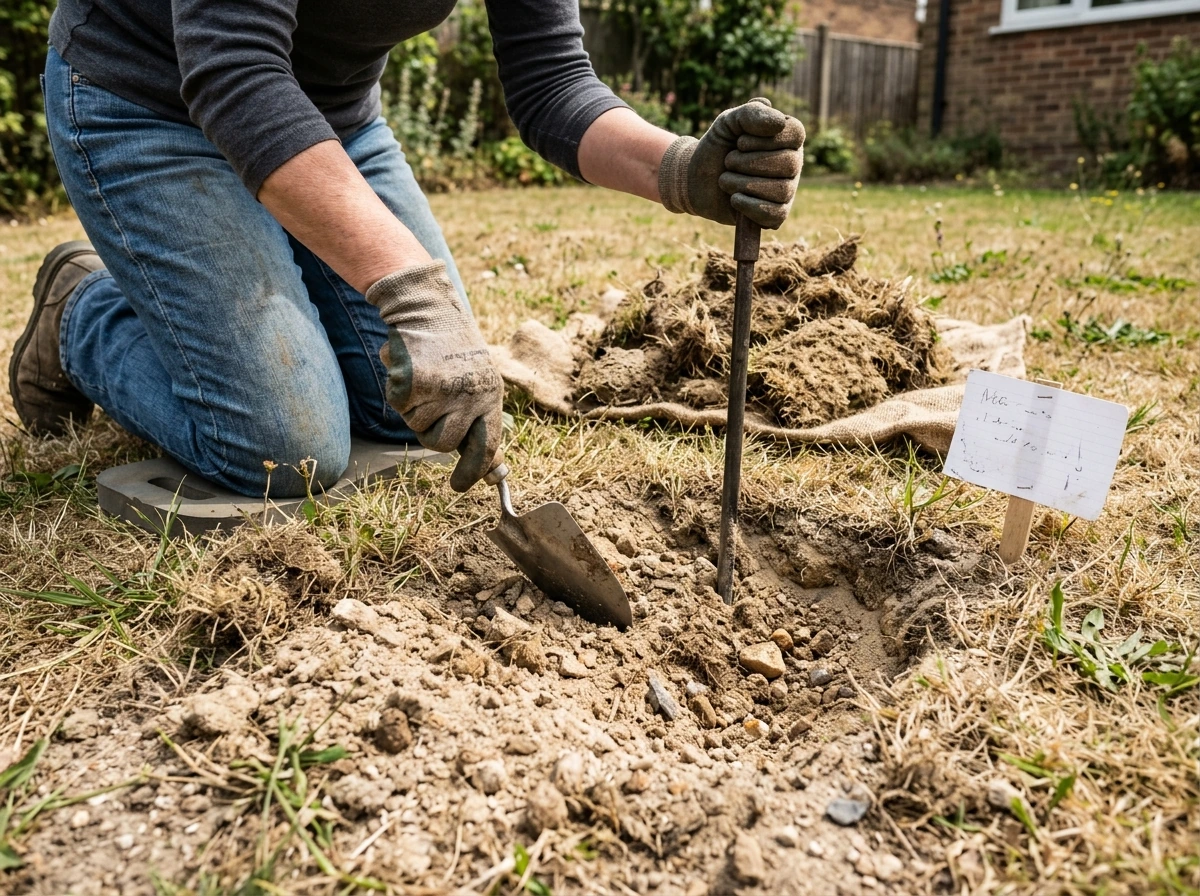
Soil compaction is another major issue, especially in high-traffic areas like the strip between a fence and a patio, or anywhere kids or dogs run the same path repeatedly. Compacted soil doesn't allow roots to penetrate, and water just sits on top or runs off. You can test this by pushing a screwdriver into dry soil. If it won't go in more than 2 inches without real effort, the soil is too compacted for grass roots to thrive.
Sandy or extremely dry soil drains so fast that grass can't pull enough moisture to survive heat stress. At the other extreme, low-lying areas with poor drainage stay waterlogged after rain, which suffocates roots. And then there's thatch. When organic matter builds up at the soil surface and doesn't decompose properly, it creates a spongy, hydrophobic layer that blocks water and air from reaching the root zone. Grass rooting into thatch instead of soil becomes drought-sensitive and disease-prone. Identify your problem first, and every decision after that gets easier.
| Problem | What it looks like | What it means for your plan |
|---|---|---|
| Deep shade | Thin, patchy, or zero grass under trees or north-facing structures | Grass won't win here; choose shade-tolerant plants or hardscape |
| Compacted soil | Water pools or runs off, screwdriver test fails at 2 inches | Loosen and amend before planting anything, or go hardscape |
| Sandy/dry soil | Grass wilts fast after rain stops, pale yellowing | Use drought-tolerant plants or improve water retention |
| Poor drainage/wet spots | Soggy ground days after rain, moss growth | Use moisture-tolerant plants or install drainage first |
| Root competition | Dead zones directly under tree canopy | Avoid planting; mulch rings or hardscape work best |
| Thatch buildup | Spongy feel underfoot, water beads on surface | Remove thatch before installing any replacement |
Best low-maintenance ground covers to replace grass
Ground covers are the most satisfying grass replacement because they look living and intentional, spread on their own over time, and once established, they largely take care of themselves. The key is matching the plant to your actual conditions.
For shade and partial shade
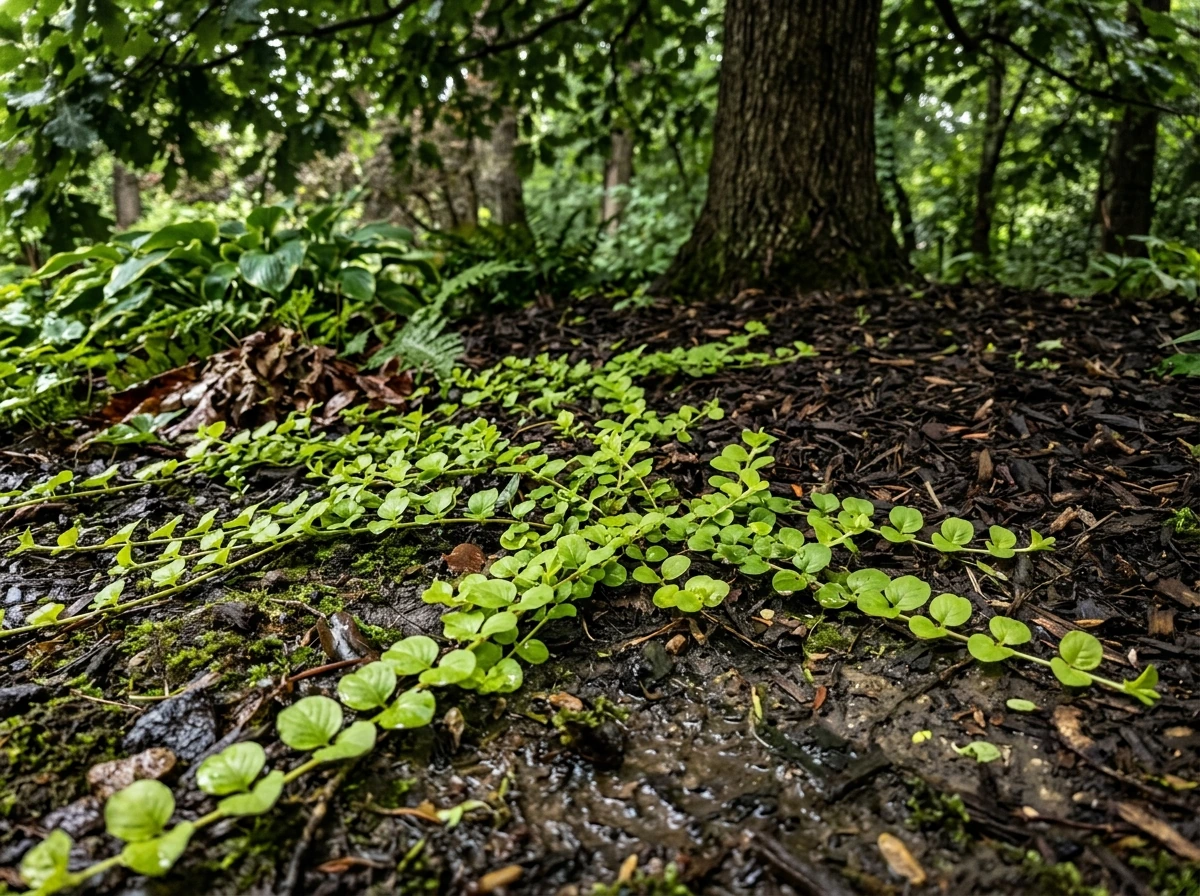
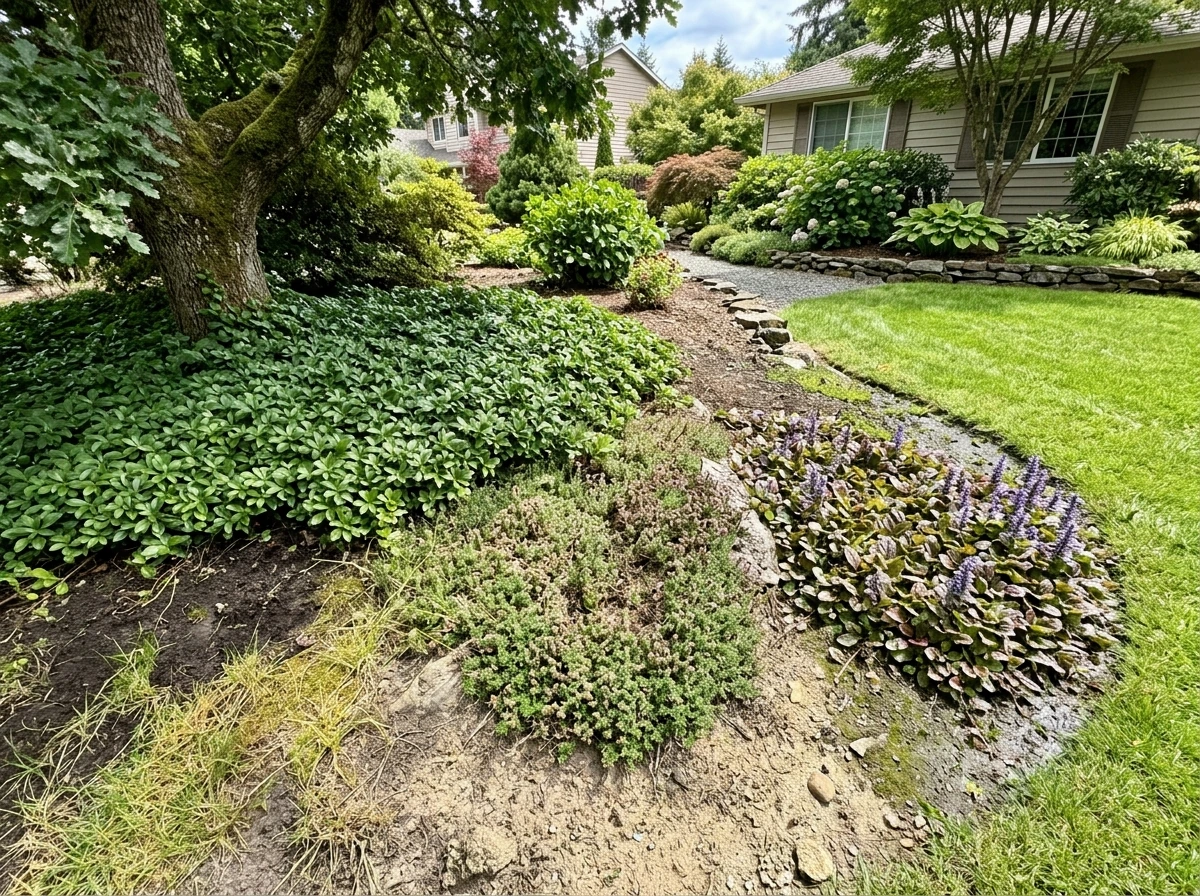
Creeping Jenny (Lysimachia nummularia) is one of my go-to recommendations for shaded or partially shaded damp spots. It spreads quickly, stays low at about 2 to 4 inches, and the chartreuse foliage looks intentional and clean. Liriope (lilyturf) is tougher and handles both dry shade and moderate foot traffic, making it ideal for those awkward strips along walkways under tree canopies. Sweet woodruff fills in well under deciduous trees and produces small white flowers in spring. For slopes in shade, pachysandra is the workhorse: dense, evergreen, and virtually bulletproof once established.
For sunny and dry areas
Creeping thyme is excellent in full sun and dry conditions. It handles light foot traffic, releases a pleasant scent when stepped on, and blooms with tiny purple flowers in early summer. Sedum (stonecrop varieties) works well in sandy, well-drained soil with full sun. Ice plant (Delosperma) is another solid choice in dry, sunny spots where almost nothing else survives. For a wilder look, native prairie ground covers like buffalo grass plugs or blue grama grass spread slowly but require almost no irrigation once established.
For wet or poorly drained areas
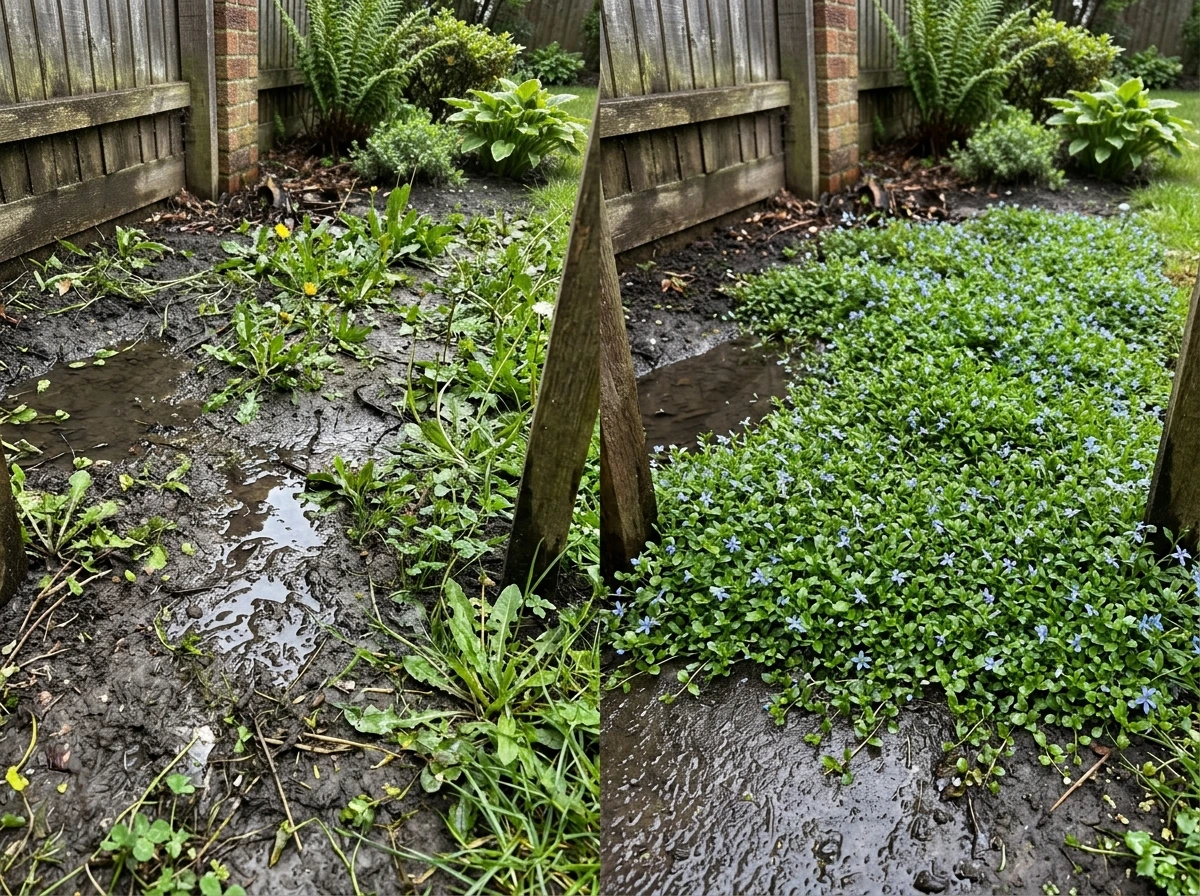
Moisture-tolerant ground covers include blue star creeper (Isotoma fluviatilis), which stays low and handles damp conditions, and native sedges like Carex pennsylvanica, which look grass-like but thrive in conditions that kill turf. If you have a consistently wet low spot, native plants adapted to those conditions will always outperform grass and require far less maintenance.
Hardscape-first options: mulch, gravel, and pavers
Sometimes the most honest solution is to stop trying to grow anything in a spot. Under dense trees, in narrow side yards, or in high-traffic zones, hardscaping is often cheaper long-term, more durable, and better looking than repeated failed planting attempts.
Mulch is the most accessible starting point. A 3-inch layer of shredded hardwood or wood chip mulch suppresses weeds, insulates soil, adds organic matter as it breaks down, and looks clean. It's the right immediate move under trees where root competition makes planting difficult. Budget roughly $30 to $60 per cubic yard for quality shredded mulch, and plan to refresh it every 1 to 2 years as it decomposes.
Gravel and crushed stone work well in dry, sunny areas or as a xeriscape feature. Decomposed granite is a popular choice for paths and open areas in warmer climates because it compacts slightly and gives a more natural appearance than river rock. Pea gravel works in areas where you want drainage without a formal look. The main trade-off with gravel is that leaf litter and organic debris collect in it and can be annoying to clean up under deciduous trees.
Pavers, stepping stones, and flagstone are the highest-cost but most permanent option. They work especially well to solve the problem of paths that cut through what used to be lawn. If the same section of grass dies every year because people walk across it, replace it with stepping stones. That's not a landscaping compromise, it's just good design. Permeable pavers are worth considering in areas with drainage problems since they allow water through while still giving you a solid, walkable surface.
Soil prep and amendments that can make or break your plan
I want to be direct about this: soil prep is where most DIY landscape projects succeed or fail. You can pick the perfect plant for your conditions and still watch it struggle if you skip this step.
For compacted soil, mechanical aeration or tilling to a depth of at least 6 inches is necessary before planting. If you're going in after compacted turf, rent a core aerator or tiller. Work in 2 to 3 inches of compost and mix it into the top 6 to 8 inches of soil. This improves both drainage and water retention, which sounds like a contradiction but is actually how healthy soil works.
If you have thatch buildup from old turf, remove it before you do anything else. As research from Cornell's turfgrass management work points out, thatch creates a hydrophobic layer that prevents water and air from reaching the soil, and according to University of Maryland Extension work, it significantly reduces tolerance to drought and temperature stress. That same thatch layer will sabotage your new planting if you leave it in place. Dethatch with a power rake or manually remove the layer before amending.
For sandy soil, the priority is increasing water and nutrient retention. Mix in generous amounts of compost (at least 3 to 4 inches worked into the top 8 inches) and consider adding a water-retaining amendment like coir fiber. For clay-heavy or poorly draining soil, gypsum can help break up tight clay structure, and again, compost is the universal improver. Get a basic soil test (available through most county extension offices for $15 to $30) before buying amendments. It tells you pH and nutrient deficiencies, which helps you spend money where it matters.
How to install your grass-free landscape step-by-step
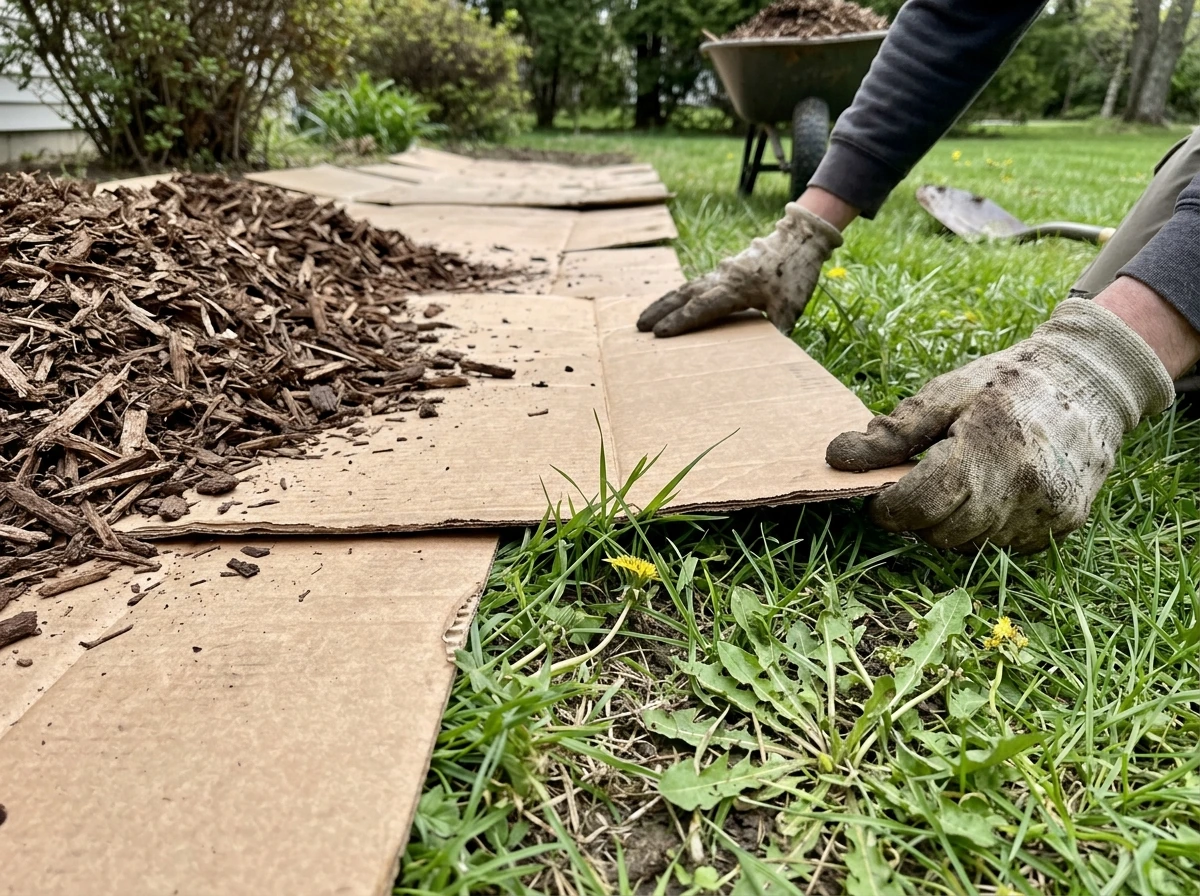
Here's the process I'd walk through on a typical problem area, whether it's a shaded zone under trees, a dry strip along a fence, or a compacted path area.
- Kill or remove existing grass and weeds. Smother with cardboard or newspaper (2 to 3 layers) for a no-dig approach, or use a sod cutter to physically remove the turf layer. If you use herbicide, wait the full label-specified time before planting.
- Test and amend your soil. Send a sample to your local extension office. While you wait for results, remove any visible thatch layer and loosen compacted areas with a tiller or garden fork.
- Add and incorporate amendments. Based on your soil test results and the conditions you've identified (sandy, clay, compacted, etc.), work compost and any specific amendments into the top 6 to 8 inches of soil.
- Install any hardscape elements first. If you're adding pavers, edging, gravel paths, or raised borders, put these in before you plant. Trying to install hardscape around established plants is frustrating.
- Lay landscape fabric if using gravel or mulch-only areas. Use a woven, water-permeable fabric, not solid plastic sheeting. Overlap seams by at least 6 inches and pin securely.
- Plant ground covers at the right spacing. Most ground covers are labeled with their mature spread. Planting closer than recommended fills in faster but costs more. A middle-ground approach is to plant at two-thirds the recommended spacing for a reasonable establishment speed.
- Water in thoroughly after planting. Even drought-tolerant plants need consistent moisture during their first 4 to 6 weeks to establish roots.
- Apply 2 to 3 inches of mulch around plants (not on top of crowns). This retains moisture, suppresses weeds, and regulates soil temperature while the ground cover fills in.
- Water regularly for the first growing season. Reduce frequency as plants establish. By the second season, most well-chosen ground covers are largely self-sufficient.
Maintenance and weed control for areas where grass won't grow
The honest truth is that the first year of a grass-free landscape requires more attention than a mature lawn does. The honest truth is that the first year of a grass-free landscape requires more attention than a mature lawn does. Weeds will try to move into bare soil before your ground covers fills in. That's normal and manageable if you're prepared.
Mulch is your best weed suppression tool during the establishment phase. Keep that 2 to 3 inch layer consistent, especially in the first spring and summer. Hand-pull weeds when they're small, ideally right after rain when the soil is loose. If you're using gravel, a pre-emergent herbicide applied in early spring (before weed seeds germinate) will save you significant work. Look for products with corn gluten meal as the active ingredient if you prefer an organic option, or use a synthetic pre-emergent like pendimethalin following label instructions carefully.
For areas with landscape fabric under gravel or mulch, expect to replace or supplement the fabric every 5 to 7 years as it degrades and organic matter accumulates on top (which then allows weed seeds to germinate in that layer). Avoid the temptation to use solid plastic, which blocks water and suffocates soil biology even though it suppresses weeds initially.
Once ground covers are established (typically by the second growing season), ongoing maintenance drops significantly. Most need only occasional trimming at the edges to keep them from spreading beyond their intended area. Liriope and ornamental sedges can be cut back to about 3 inches in late winter before new growth emerges to keep them looking fresh. Creeping thyme and sedum need almost nothing beyond removing dead growth after winter.
Choosing plants based on shade, sun, and sandy or dry conditions
The single biggest mistake I see is choosing plants based on what looks good at the nursery rather than what matches the actual conditions at home. Here's a practical breakdown of what works where.
| Condition | Best ground cover options | What to avoid | Notes |
|---|---|---|---|
| Dense shade (under trees, north-facing) | Pachysandra, sweet woodruff, native ferns, wild ginger | Sun-loving sedums, creeping thyme | Pair with mulch rings close to trunk where nothing will grow |
| Partial shade (2-4 hrs sun) | Liriope, creeping Jenny, ajuga, hostas as border plants | Anything labeled 'full sun only' | Ajuga spreads fast; great for slopes |
| Full sun, normal soil | Creeping thyme, clover, dymondia, ornamental grasses | Shade-only plants like pachysandra | Clover fixes nitrogen and handles foot traffic |
| Full sun, sandy or dry soil | Sedum (stonecrop), ice plant, buffalo grass, creeping phlox | Moisture-hungry plants like creeping Jenny | Amend with compost first for faster establishment |
| Wet or poorly drained areas | Native sedges (Carex), blue star creeper, blue flag iris | Drought-tolerant varieties, most sedums | Consider drainage improvements alongside planting |
| High foot traffic areas | Liriope, creeping thyme (light traffic only), flagstone + low plants between | Delicate ground covers like sweet woodruff | For heavy traffic, lean toward hardscape with plant pockets |
If you're dealing with sandy, dry, full-sun conditions, don't fight it. Lean into drought-tolerant natives and xeriscape principles. These plants have evolved to thrive in exactly the conditions where grass fails. If shade is your problem, especially under a large established tree, recognize that the root competition is often as much of a factor as the light levels. In that case, a wide mulch ring (extending to the drip line of the canopy) combined with shade-tolerant plants at the outer edges is often the most realistic and lowest-maintenance solution. There's more detail on plant selection for these specific scenarios in the related guides on what to plant where grass won't grow and on landscaping under trees where grass won't grow.
Which approach is right for your situation
If I had to give one piece of advice to someone standing in front of their problem spot today, it would be this: stop trying to force grass to grow where it doesn't want to, and design around the actual conditions you have. That shift in mindset makes every decision easier.
Go hardscape-first (mulch, gravel, pavers) if your area gets very heavy foot traffic, is directly under a dense tree canopy, or if you simply want zero maintenance after installation. Go with ground covers if you want a living, softer look, have a larger area to cover where hardscape would be expensive, and are willing to do the soil prep and first-season weeding. Combine both if your problem area has varied conditions: hardscape near the tree trunk and high-traffic zones, ground cover at the edges where light improves and foot traffic decreases.
Whatever you choose, the soil prep and honest condition assessment you do upfront will determine whether your new landscape thrives or just becomes another frustrating failure in the same spot. Do that work first, and the rest falls into place.
FAQ
Will ground covers replace grass well if my lawn is just thin, not completely dead?
Often yes, but treat it like a “transition” job. First, confirm the cause (sun, compaction, drainage, thatch). Then only spot-install where grass is consistently failing, and keep mowing around the edges until the new plants establish, so weeds and remaining turf do not outcompete the new growth.
How long should I expect until the area looks filled in and stops needing attention?
Most replacements look patchy at first. Plan for the first full growing season to require regular weeding and edge trimming. Many ground covers fully cover after the first year, with the cleanest, most weed-suppressing look typically by the second growing season, depending on light and soil prep quality.
Is it worth trying grass one more time if I suspect shade is the issue?
Usually not if the area gets less than about 4 hours of direct sun consistently. Even shade-tolerant grass can fail under dense tree roots. If you want to keep some living cover, consider a different strategy like using a mulch ring plus shade-tolerant ground covers at the margins where light is higher.
What’s the difference between compost and other amendments, and how much should I add?
Compost is the broad “improver” because it boosts soil structure and helps with both water retention and drainage balance. For sandy areas, the article suggests working in several inches into the top portion of the soil. For clay or poor drainage, compost still goes in first, and other amendments (like gypsum) are only useful if you confirm a structure issue with a soil test.
Do I need a soil test even if I know the area is dry or shady?
Yes, especially before spending on amendments like gypsum, coir, or specialty mixes. A test can reveal pH and nutrient constraints that affect plant performance, and it helps you avoid “fixing” the wrong problem when the real driver is compaction, drainage, or root competition.
Can I use landscape fabric under mulch or gravel to block weeds?
Fabric can reduce early weeds, but it is not a set-and-forget solution. Organic debris and soil collect on top over time, and weed seeds can germinate in that layer. Plan to replace or supplement it after several years, and avoid solid plastic because it restricts water and soil life.
How do I handle weeds in the first year without damaging new ground covers?
Use timing and small-scale removal. Hand-pull when weeds are small, ideally after rain. Keep mulch depth consistent (about the range mentioned) to suppress new germination. For gravel areas, a properly timed pre-emergent can help, but be careful not to apply products that could interfere with desirable plants you are trying to establish.
Should I remove dead grass and roots before installing ground covers or hardscape?
In most cases, yes. Old turf can leave thatch and organic layers that interfere with water and root access. For ground covers, remove or dethatch before adding compost and planting. For hardscape, removing failing turf helps prevent settling and uneven surfaces later.
Why do some ground covers fail even after good plant choice?
The most common cause is poor soil prep, especially compaction or thatch left in place. Another frequent issue is watering mismatch during establishment, such as letting the soil dry out too quickly in sandy areas or staying waterlogged in low spots. Match watering and soil conditions to the plants’ tolerance, not just the label.
What’s the safest approach for high-traffic areas where people or pets keep walking?
Design around the traffic pattern. If the same strip repeatedly gets stepped on, stepping stones or pavers solve the problem permanently. If you prefer a living surface, choose tougher plants mentioned for moderate foot traffic and keep soil prep strong, but still expect some trimming and reestablishment in worn areas.
If I go with gravel, how do I reduce mess from leaves and debris?
Gravel areas under deciduous trees tend to collect organic litter. Options include using a better-edged border with better containment, choosing a smaller or more uniform stone for easier cleanup, and scheduling occasional raking or blowing during seasonal leaf drop. If cleanup is a deal breaker, hardscape or ground covers may be a better long-term fit.
Do I need to worry about drainage under pavers or paths?
Yes. Even with permeable pavers, plan for underlying drainage so water does not pool and undermine the base. Ensure proper base layers and that water can move away from the surface, especially in low-lying zones where turf fails due to waterlogging.
Can I combine hardscape and ground covers without creating a maintenance nightmare?
Yes, and it is often the lowest-maintenance layout. A practical pattern is hardscape in high-traffic and near problematic zones, then ground cover where light is better and foot traffic decreases. Keep a clear edge, so ground covers do not creep into unwanted areas and so mulch or gravel stays neat.
Next Articles
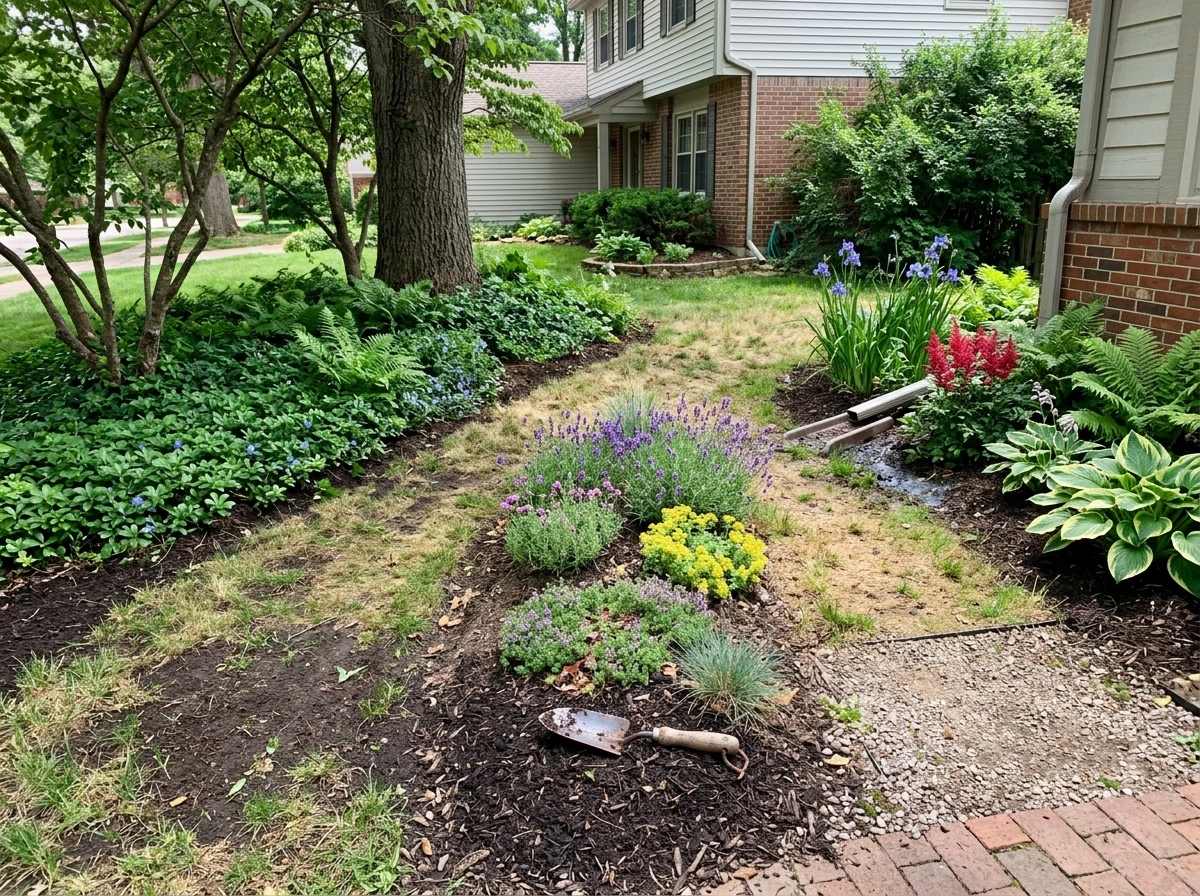
What to Plant Where Grass Won't Grow: Easy Guide
Diagnose why grass fails then plant shade, dry, wet or clay-proof ground covers, perennials and shrubs with step-by-step
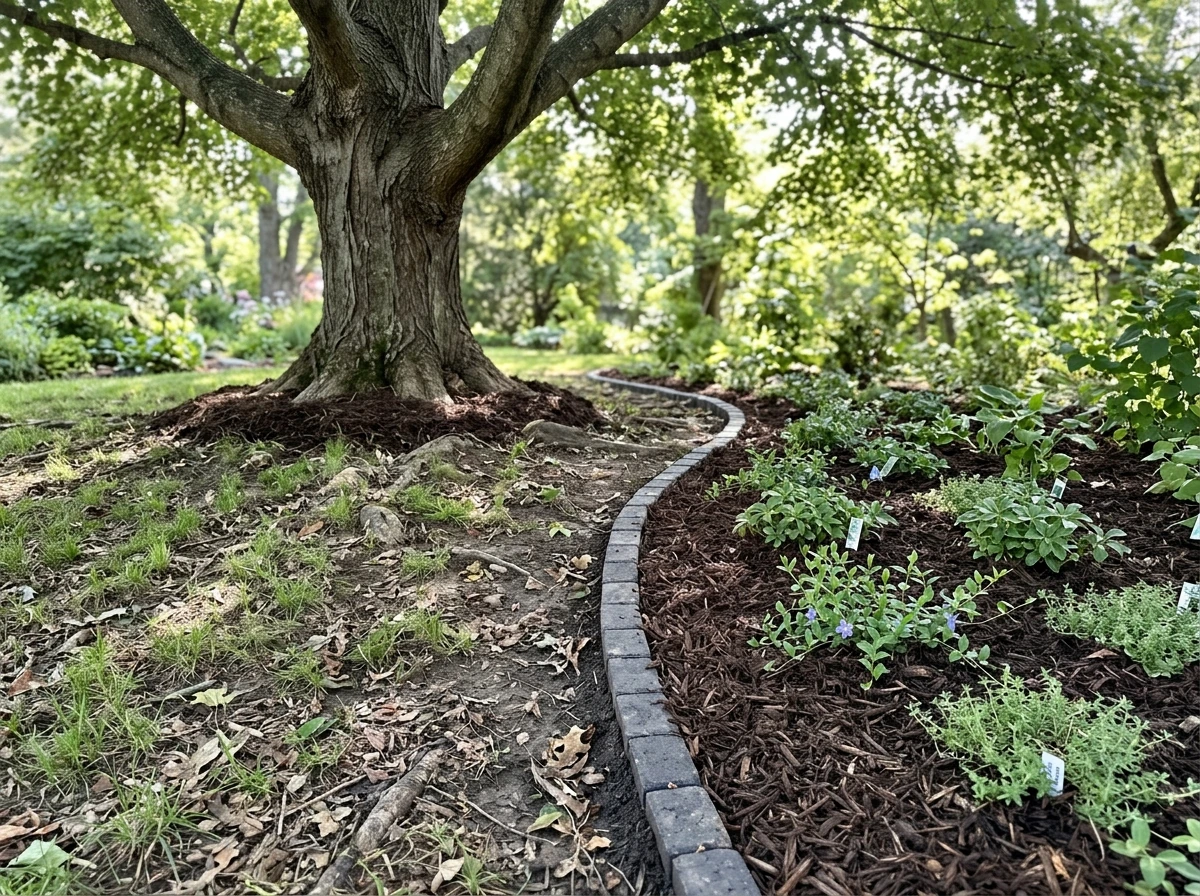
Landscaping Under Trees Where Grass Won’t Grow: A How-To Guide
How to replace failing tree-shade lawns: assess soil and roots, prep with mulch, and install durable groundcovers.
Best Ground Cover for Areas Where Grass Won’t Grow
Pick the best ground cover for tough spots where grass fails, with prep tips, spacing, and fast, low-maintenance options