
No, sugar does not help grass grow. It is not a fertilizer, it does not supply any of the nutrients grass actually needs, and in most cases adding it to your lawn will do nothing useful at all. I know that sounds blunt, but the short answer really is that blunt. If your grass is struggling, sugar is not the fix, and spending time on it will just delay you from finding what actually is.
Does Sugar Help Grass Grow? What to Do Instead
Marcus Volkmann
24 Mar 2026
What sugar actually does in soil
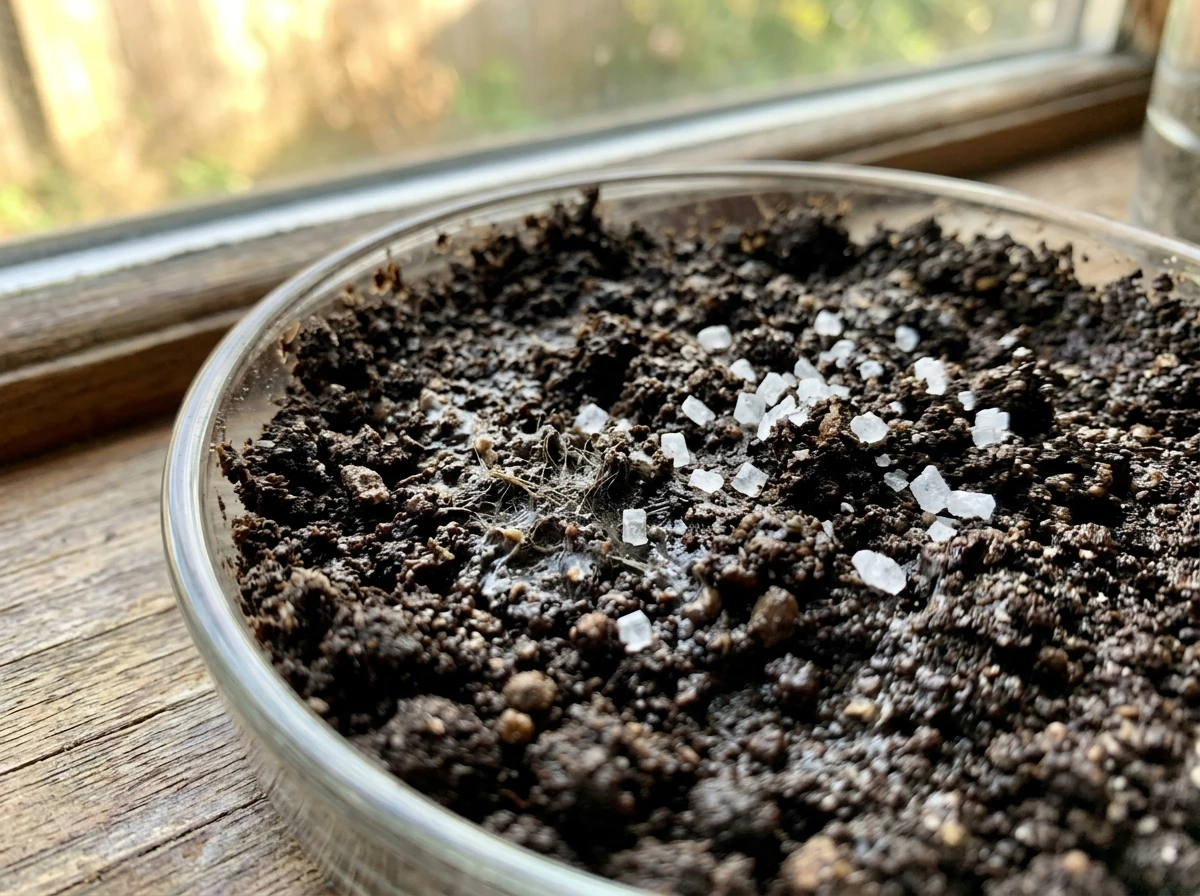
When you pour sugar onto soil, the thing that responds most enthusiastically is not your grass, it is the microbial community living in the soil. Bacteria and fungi treat simple sugars like sucrose or glucose as a food source, so microbial respiration ramps up fairly quickly. You can measure the spike in CO2 coming off the soil if you want proof that something is happening. But here is the catch: that microbial activity does not automatically benefit your turf.
What those microbes need to grow and reproduce is not just carbon, they also need nitrogen. If your soil is already short on nitrogen (and most lawns are), all those extra microbes will compete directly with your grass roots for the nitrogen that is available. This process is called nitrogen immobilization, where soil microbes tie up nitrogen in their own biomass so effectively that plant-available nitrogen actually drops. So in a nitrogen-limited lawn, adding sugar can temporarily make your grass situation worse, not better.
Even in soils where nitrogen is adequate, the sugar gets metabolized and the microbial population boom fades. There is no lasting structural benefit to soil health from a one-time sugar dump. The short-lived bump in biological activity does not translate into more green, more density, or faster establishment of grass.
Why sugar won't fertilize your lawn
Grass needs nitrogen above all else. That is the central fact of turfgrass nutrition, and it is why every serious lawn fertilization program is built around nitrogen supply and timing. Phosphorus and potassium matter too, but nitrogen is the nutrient that drives green color, shoot density, and recovery from stress. Sugar contains none of these. It is pure carbon and hydrogen and oxygen, and your grass already has access to carbon through photosynthesis. It does not need more of it from your bag of table sugar.
Jon Trappe at the University of Minnesota Extension has been direct about this: there is no evidence that simple table sugar helps lawns, and it does not replace nitrogen-based fertilization. Penn State Extension reinforces the same point, noting that turfgrasses need nitrogen, phosphorus, and potassium in amounts that soil alone often cannot supply. Sugar addresses none of those deficits.
Real risks of putting sugar on your grass
Beyond simply doing nothing, sugar can actively cause problems. Here are the ones worth knowing about before you try it:
- Nitrogen drawdown: As described above, microbial activity triggered by sugar can immobilize soil nitrogen, leaving grass temporarily more deficient than before you started.
- Pest attraction: Sugar on the soil surface can attract ants, wasps, and other insects. In larger quantities it can draw wildlife into your yard.
- Fungal and disease pressure: A carbon-rich environment can encourage certain soil pathogens and fungi. Extension educators have flagged this risk when carbohydrate amendments are used as growth stimulants without any evidence base.
- Oxygen depletion: A surge in microbial respiration consumes oxygen in the soil pore space, which can temporarily create conditions that stress shallow grass roots, especially in compacted or already poorly drained soils.
- Money and time wasted: This might sound minor compared to the others, but if your lawn is struggling right now, every week you spend chasing a sugar fix is a week you are not addressing the actual problem.
Why is your grass actually struggling? Here's how to find out
Slow or patchy grass almost always comes down to one of a small set of real causes: the wrong nutrients, compacted soil, thatch buildup, not enough water, too much shade, or the wrong grass type for the location. The best thing you can do today is diagnose which one you are dealing with, because the fix is completely different depending on the cause.
Check for compaction and thatch first
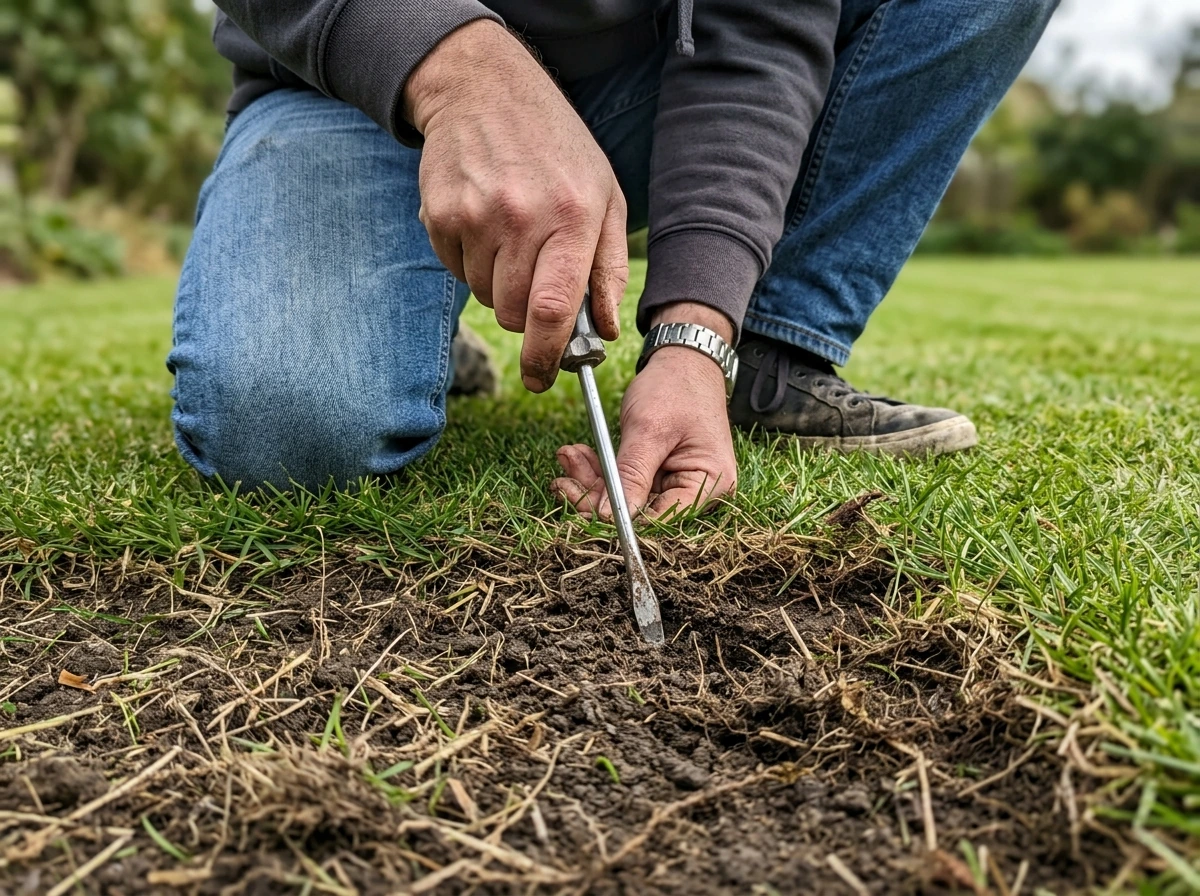
Compaction reduces pore space in the soil, which cuts off oxygen, slows water infiltration, and physically resists root penetration. If you can barely push a screwdriver into your soil by hand, compaction is almost certainly part of your problem. Similarly, thatch, the layer of dead and living organic material between the soil surface and green grass blades, can choke turf when it gets thicker than about half an inch. UMN Extension recommends cutting a two-inch wedge out of your lawn and measuring that layer directly. If it is thick, that is your culprit.
Core aeration is the solution to both. Penn State Extension recommends aerating during cool weather, meaning early or mid spring or late summer and early fall, to give the grass the best chance to recover quickly. Aeration also reduces thatch by improving the microbial decomposition that breaks it down naturally.
Sunlight and water: the basics that get overlooked
Most turfgrasses need a meaningful amount of direct sun to thrive. If you have got heavy shade from trees, no nutrient program in the world will fully compensate. (If shade is your main challenge, it is worth reading up on shade-tolerant grass options for your region.) Water is the other basic that catches people off guard. Established lawns generally need about 1 to 1.5 inches of water per week from rainfall or irrigation, applied deeply enough to reach the root zone rather than just wetting the surface. Illinois Extension and Missouri Extension both flag this range as the threshold for keeping grass actively growing through summer.
Mowing matters more than people think
Cutting too short is one of the most common reasons lawns look thin and stressed. UMN Extension gives a practical rule: if you want to maintain a 3-inch lawn height, mow before the grass exceeds 4.5 inches. That one-third rule protects the leaf area that drives photosynthesis and energy storage. Raise your mower deck and stick to the rule, and you will often see density improve within a few weeks without changing anything else.
What to do right now: soil testing, nitrogen, and a real plan
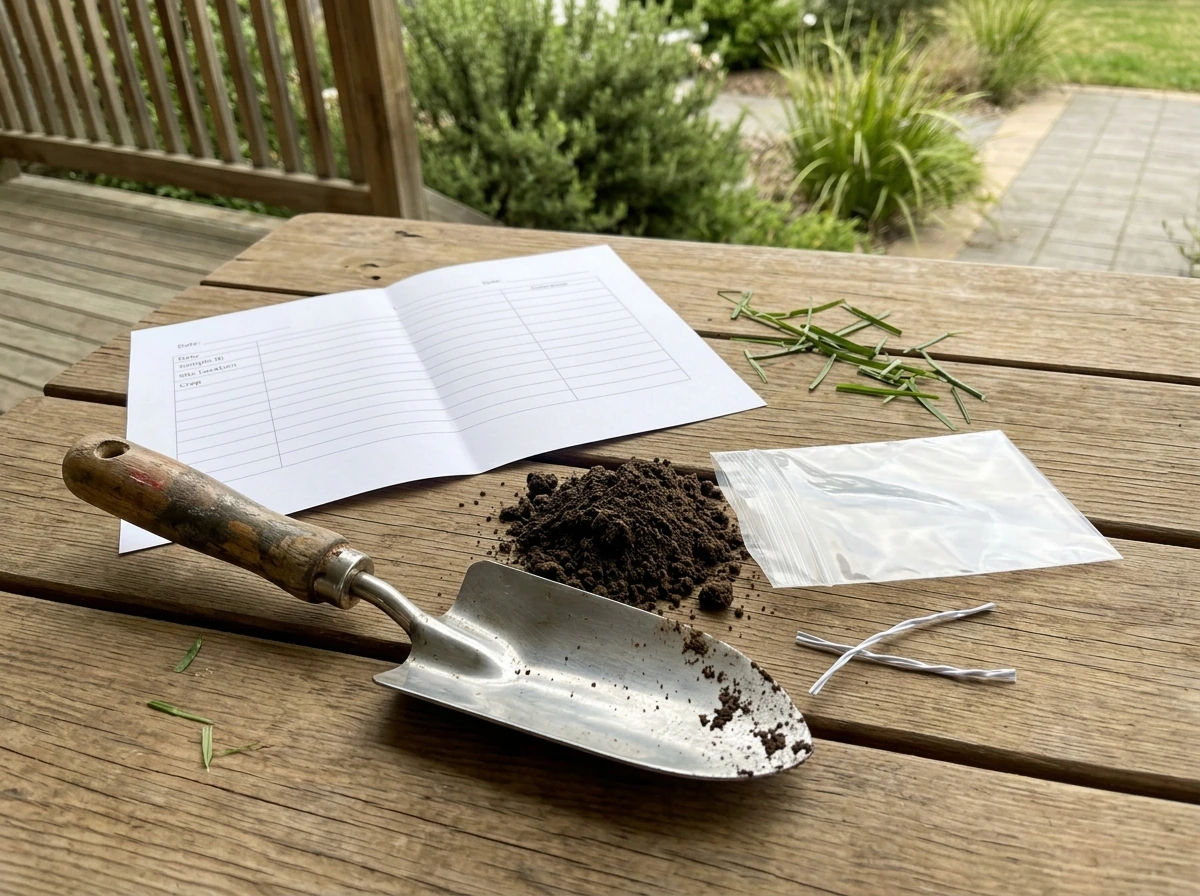
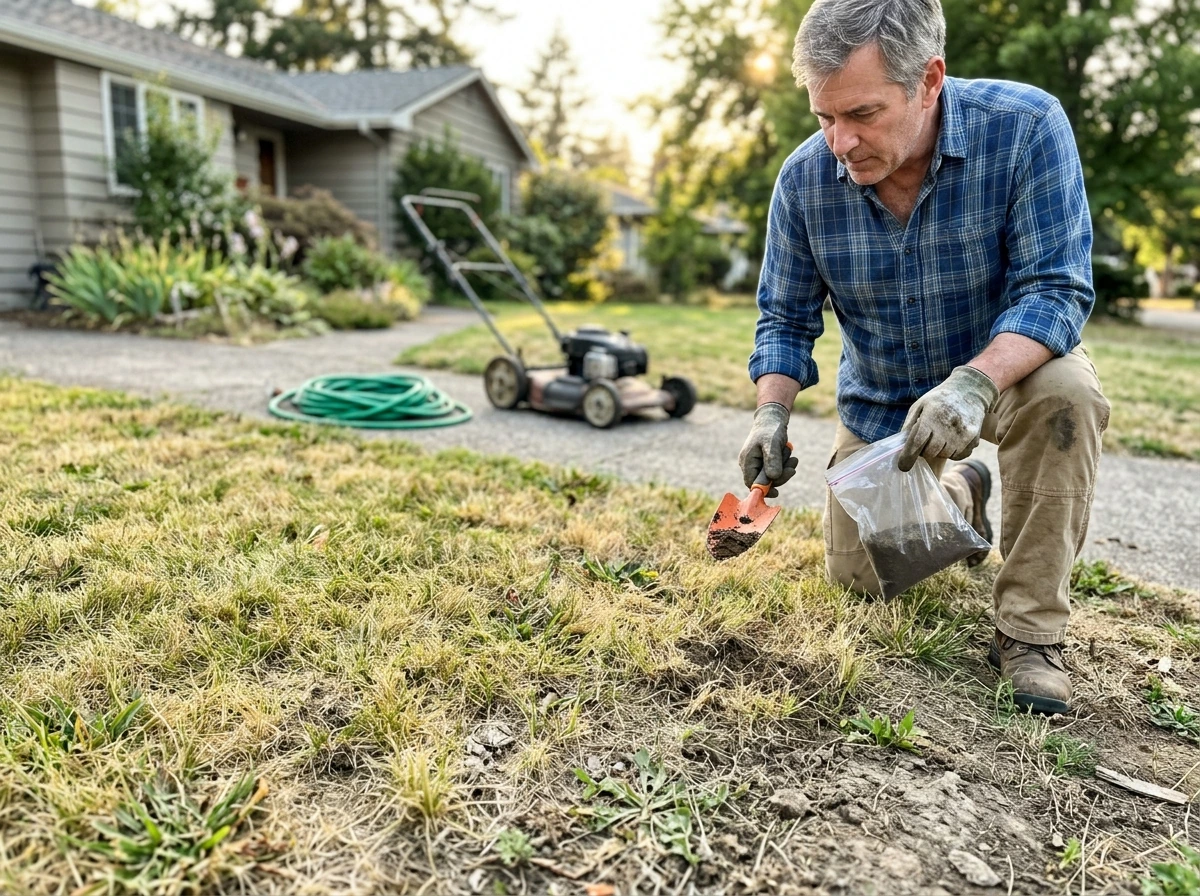
If you have ruled out compaction, thatch, water stress, and mowing errors, the next step is a soil test. This is the single most useful thing you can do for a struggling lawn because it tells you exactly what is limiting growth. A standard lawn soil test gives you pH, percent organic matter, phosphorus, and potassium. UMN Extension explains that these results are what you use to decide what to add, not guesswork and definitely not sugar. You can order a test through your local extension service for a modest cost, and most labs turn results around within a couple of weeks.
While you wait for results, it is reasonable to address nitrogen if your lawn has not been fertilized recently, because nitrogen deficiency is the most common reason for slow, pale, or thin turf. Oregon State Extension notes that soluble nitrogen fertilizers need to be watered in thoroughly after application to avoid burn. Cool-season grass owners should know that fall is the most important fertilization window, with a lighter spring application also beneficial. Missouri and Penn State Extension both emphasize fall feeding as the priority for cool-season turf recovery.
Here is a practical sequence to work through:
- Order a soil test through your local extension service today. It costs very little and removes all the guesswork from your nutrient program.
- Check your lawn for compaction (screwdriver test) and thatch (cut a small wedge and measure). If either is present, schedule core aeration for the next appropriate weather window.
- Apply a balanced nitrogen fertilizer if the lawn has not been fed in the past several months. Water it in well after application.
- Confirm you are hitting 1 to 1.5 inches of water per week, either from rain or irrigation. Water deeply and infrequently rather than lightly every day.
- Raise your mower deck to maintain a 3-inch grass height and stick to the one-third cutting rule.
- Once soil test results arrive, adjust pH if needed (lime for low pH, sulfur for high pH) and address any phosphorus or potassium gaps the test reveals.
- If bare or thin patches persist after correcting the above, overseed after dethatching or aerating to get new seed-to-soil contact.
Sugar vs. the amendments that actually move the needle
Since this site covers a lot of unconventional soil amendments, it is worth a direct comparison. Some amendments like Epsom salt have a specific use case (magnesium deficiency), Some amendments like Epsom salt have a specific use case (magnesium deficiency), and others like hay or straw serve a real function as mulch over new seed. Sand is another one people reach for, will sand help grass grow depends heavily on your existing soil texture. Sugar does not fit into this category. It has no known mechanism for improving grass growth in a lawn context, no meaningful nutrient contribution, and real downside risks. It is not a close call.
| Amendment | What it actually provides | Useful for turf? | Risk level |
|---|---|---|---|
| Nitrogen fertilizer | Primary macronutrient for green growth and density | Yes, core of any lawn program | Low if applied correctly |
| Compost / organic matter | Slow-release nutrients, improved soil structure | Yes, especially for poor soils | Very low |
| Lime | Raises soil pH, improves nutrient availability | Yes, when pH is too low | Low |
| Epsom salt | Magnesium and sulfur | Only if deficient | Low to moderate |
| Table sugar | Carbon only, feeds soil microbes briefly | No | Moderate (nitrogen drawdown, pests, disease) |
The bottom line is that grass grows when it has the right nutrients, the right soil structure, enough water, and enough light. None of those needs are met by sugar. Skip it, run a soil test, fix the actual constraint, and your lawn will respond in ways that a bag of granulated sugar never could.
FAQ
If I already poured sugar on my lawn, what should I do now?
Stop adding sugar. If the area looks worse or more weeds show up, prioritize irrigation to keep the soil from drying out and then run a soil test to guide nitrogen and other inputs. A one-time sugar application can temporarily boost microbes, but it does not replace a correct nutrient plan.
Could sugar help grass indirectly by feeding soil microbes?
Microbes do respond to sugars, but faster microbial activity does not guarantee more grass because microbes can immobilize nitrogen, reducing plant-available nitrogen. In many lawns, nitrogen is already limiting, so the net effect can be negative rather than beneficial.
Does sugar work differently if I use it as compost tea or in homemade lawn mixes?
Any product where simple sugars are the main ingredient has the same core issue, you mainly add carbon without supplying nitrogen, phosphorus, or potassium. If you want to improve soil biology, use approaches that also address nutrients, like compost applied at a realistic rate or a fertilizer plan based on a soil test.
How much sugar would you need for it to make any difference?
There is no practical, evidence-based amount that reliably improves turf. Trying higher amounts increases the risk of nitrogen immobilization and can worsen patchiness. If your goal is better growth, use a nutrient program tied to soil test results instead.
Will sugar attract pests like ants or cause more weeds?
It can, because sugars can provide a food source for insects and can increase microbial and pest activity in the short term. Even if grass does not benefit, the indirect effects can still make maintenance harder.
Does sugar help with patchy grass the way fertilizer does?
Usually no. Patchiness is most often caused by specific constraints like compaction, thatch, poor watering, insufficient light, or nutrient imbalance. Before doing any amendments, diagnose the likely cause and then correct that single limiting factor.
Can I use sugar to speed up seed germination?
For most situations, it is not a good idea. Seed success is driven by seed-to-soil contact, consistent moisture, temperature, and nutrient availability, especially nitrogen. If you are seeding, focus on proper watering and use a starter fertilizer when appropriate for your grass type.
Is brown sugar or molasses better than table sugar?
Not reliably for turf. Molasses contains some additional compounds, but it still does not provide the nitrogen-driven nutrient balance grass needs. Unless you are correcting a measured deficiency, adding sugar sources is still an inefficient and potentially harmful substitute.
What nutrient should I prioritize instead of sugar?
Prioritize nitrogen based on your lawn’s season and soil test results. Nitrogen is the main driver of green growth and recovery, and it is usually what lawns are missing, while sugar provides essentially no plant-available nitrogen.
How soon will I see improvement after using the right fix?
It depends on the constraint you correct. With aeration and proper watering, you may notice changes within a few weeks, while nutrient corrections based on a soil test can show visible improvement over several weeks. For severe compaction or light problems, results can take longer and may require longer-term adjustments.
Next Articles
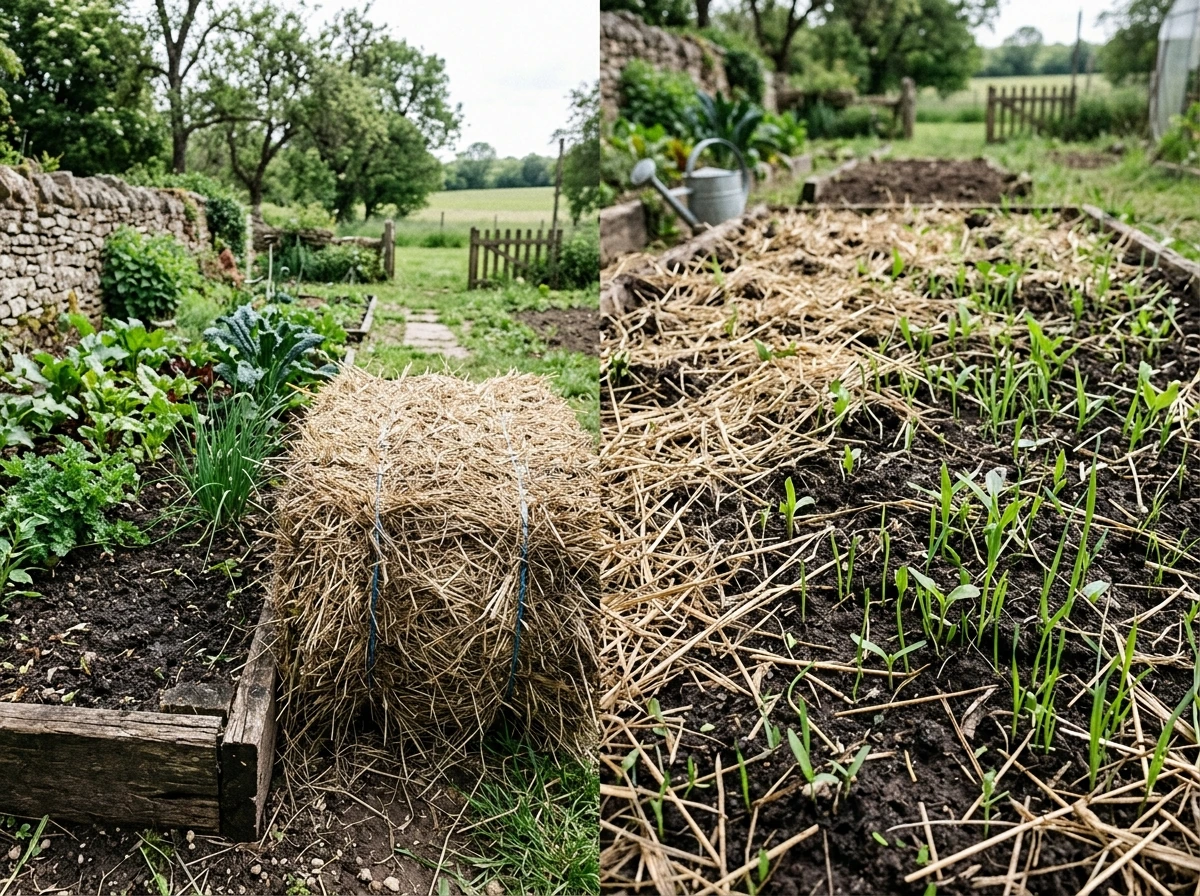
Does Hay Grow Grass? When It Can and How to Control It
Find out if hay can sprout grass, when it happens, and how to encourage or stop it in yards and gardens.
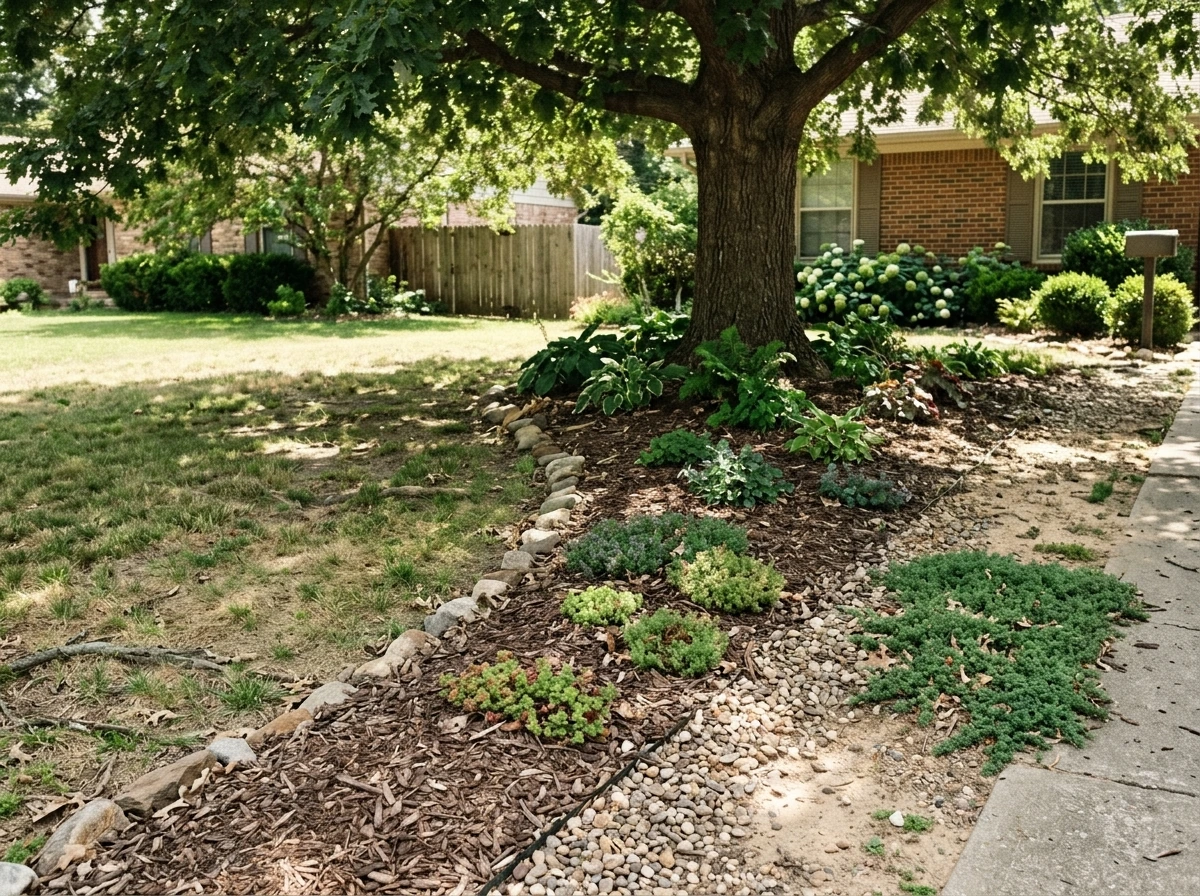
Landscape Ideas Where Grass Won’t Grow: Practical Steps
Turn tough spots into weedproof beds with shade, dry, sandy or poor soil plans, ground covers, and step-by-step install.
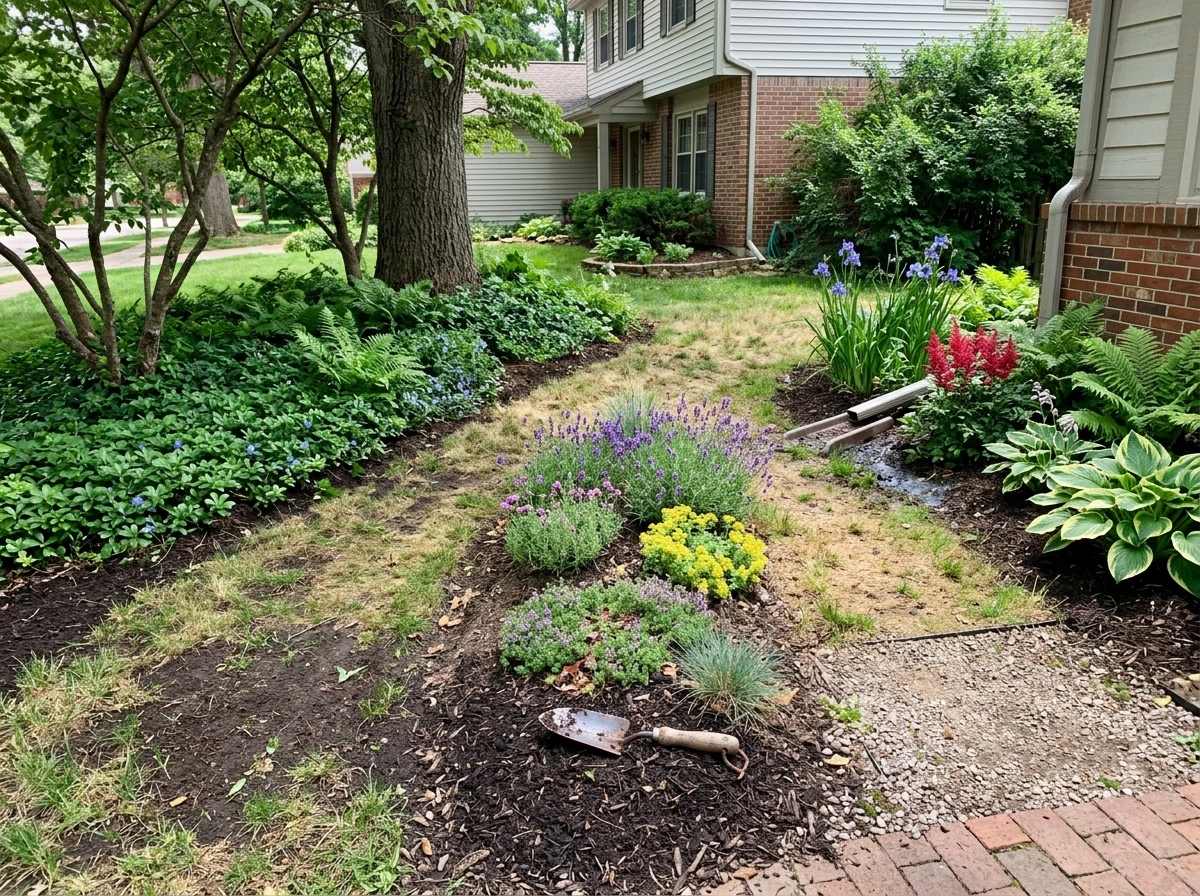
What to Plant Where Grass Won't Grow: Easy Guide
Diagnose why grass fails then plant shade, dry, wet or clay-proof ground covers, perennials and shrubs with step-by-step