Quick Answer: Will Sand Help Grass Grow?
Sometimes yes, often no, and occasionally it makes things worse. Sand can genuinely help grass grow when your soil has a compaction or drainage problem and you apply it correctly, in thin layers, using the right particle size. But if you dump a thick layer of sand on a struggling lawn hoping it'll fix things, you're likely to end up with a patchy, nutrient-starved mess. The outcome depends almost entirely on why your grass is struggling in the first place, what your existing soil looks like, and how you apply the sand. Get those three things right, and sand is a useful tool. Get them wrong, and you've just added another problem.
What Sand Actually Does to Your Soil
Sand changes your soil's physical structure, and that ripples out into drainage, compaction, nutrient availability, and biological activity. Understanding those four effects tells you pretty quickly whether sand is going to help your specific situation.
Drainage and pore space
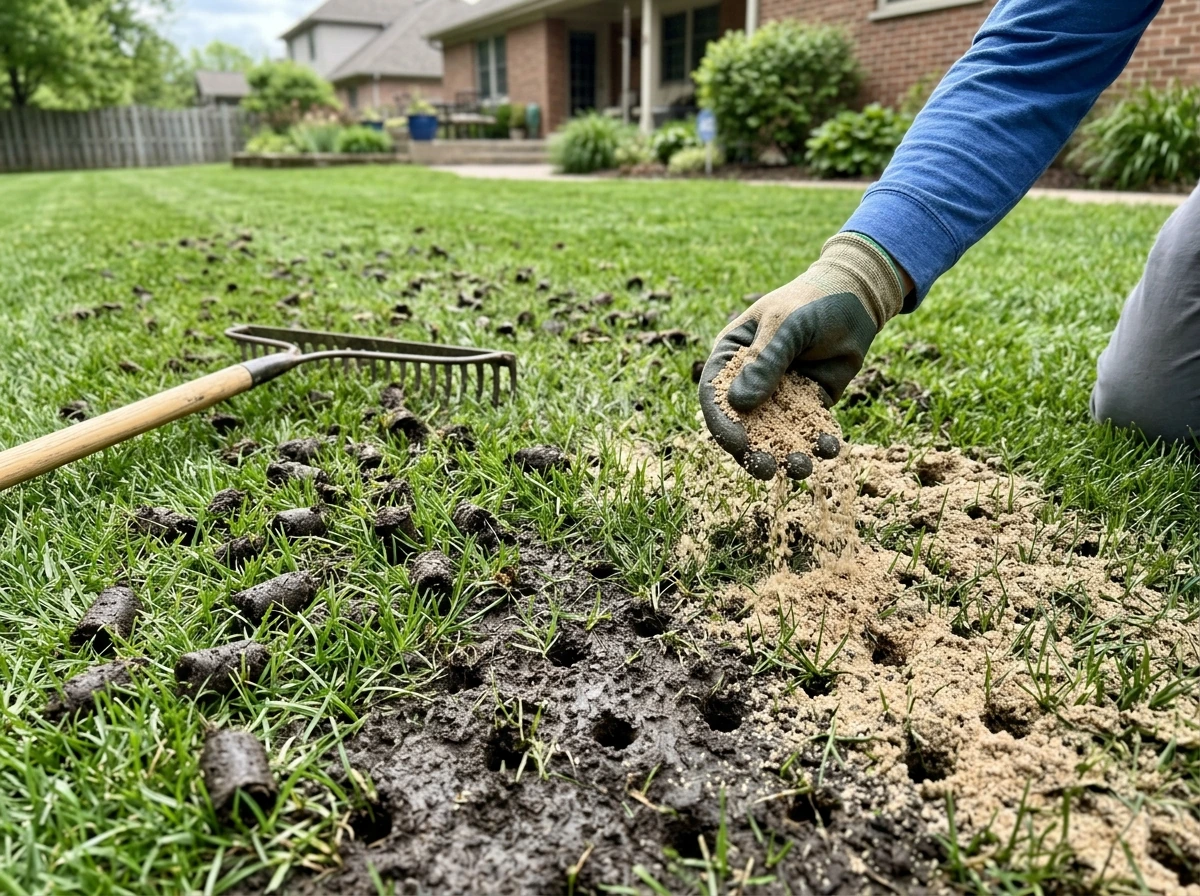
Sand's biggest selling point is that it creates large pore spaces in the soil, which allows water to move through quickly instead of pooling. This is exactly why athletic field managers and golf course superintendents use sand-based rootzones. If your lawn holds puddles for days after rain or feels spongy and soft underfoot, adding sand to the mix can genuinely improve drainage and firm up the surface. The key word there is 'mix.' Sand does the drainage job when it becomes part of the soil profile, not when it just sits on top.
Compaction
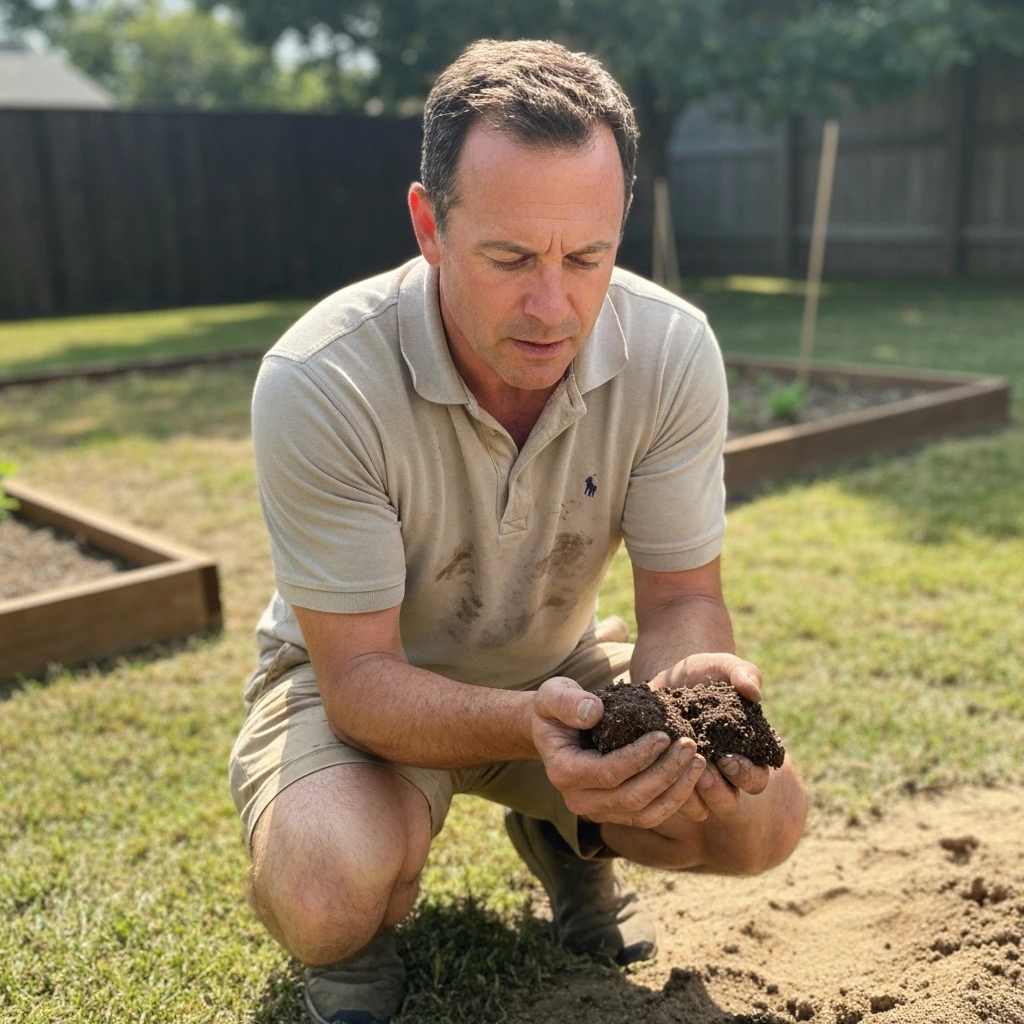
Compacted soil squeezes out the air pockets that grass roots need to breathe. Sand topdressing, especially when done after core aeration so the sand filters down into the holes, physically opens up the profile and reduces compaction over time. Mississippi State University Extension specifically points to compaction and thatch as the two main problems that make topdressing worthwhile. If compaction isn't your problem, this benefit doesn't apply to you.
Nutrient holding capacity
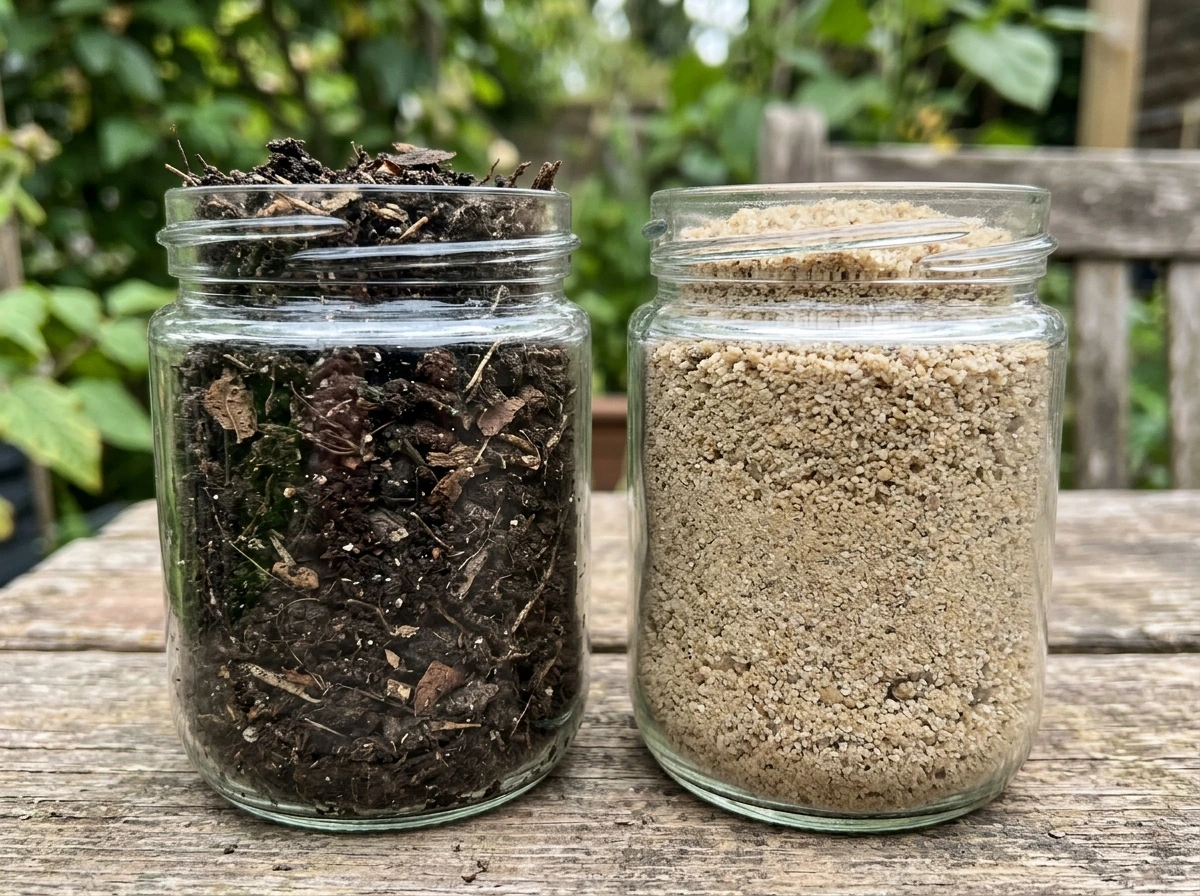
This is where sand works against you. Sand has very low cation exchange capacity, meaning it holds almost no nutrients. Water and fertilizer drain right through a sandy rootzone, which is why grass grown in heavy sand needs more frequent, smaller fertilizer applications to stay green. If you add a lot of sand to soil that's already nutrient-poor, you can make a bad situation significantly worse. Sand does not add anything nutritionally. It's purely a structural amendment.
Soil microbes and biology
Healthy soil is full of microbial life that breaks down organic matter, cycles nutrients, and supports root health. Sand itself is biologically inert. Heavy sand topdressing can disrupt the soil food web by diluting organic matter and altering the conditions that soil organisms depend on. Research from the University of Connecticut even found that sand topdressing affects earthworm casting activity differently depending on your rootzone type. Earthworms are a useful proxy for overall soil health, and their behavior matters to your lawn. Adding sand aggressively can temporarily quiet down that biological activity.
When Sand Actually Helps
There are real situations where sand is the right call. Here's where it tends to work well.
- Heavy clay soil with drainage problems: Clay holds water so tightly that roots suffocate. Light, repeated sand topdressing, especially combined with aeration, gradually opens the profile and improves drainage without the dramatic disruption of rototilling.
- Low spots and surface leveling: Clemson University Extension specifically recommends sand topdressing for filling gaps, low areas, and bare spots on home lawns. It's a practical way to level an uneven surface without reseeding the whole area.
- Thatch reduction: Topdressing after core aeration helps dilute thatch buildup and speeds its breakdown by improving microbial access to the organic layer.
- High-traffic areas: Research published in HortTechnology found that sand topdressing improved shear strength and turfgrass density on heavily trafficked athletic fields. If you have a lawn area that takes a beating from kids, pets, or foot traffic, targeted sand topdressing can help.
- Warm-season grasses on appropriate soils: Bermudagrass, zoysiagrass, and similar warm-season turf types are commonly managed with sand topdressing on golf courses and athletic fields and respond well to it when the underlying soil conditions are appropriate.
When Sand Hurts or Just Doesn't Work
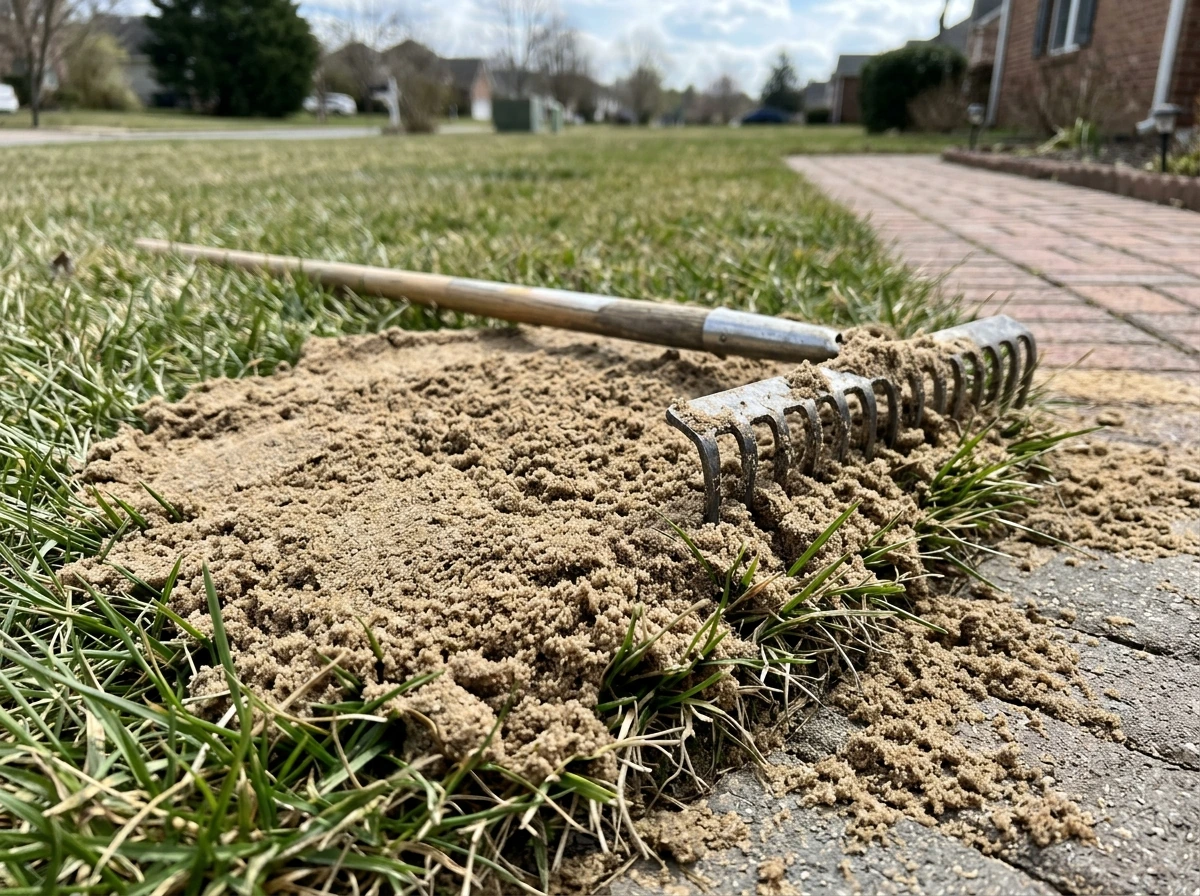
Sand gets misused constantly, and the failures are predictable. Watch out for these scenarios.
Applying it too thick
Clemson University Extension is clear on this: topdressing applications heavier than about half an inch at a time can stunt turfgrass growth, reduce oxygen availability to roots, increase disease incidence, and essentially smother the grass underneath. Thick sand layers create a barrier rather than an amendment. More is not better here.
Using the wrong particle size
This is the one that catches most homeowners off guard. Purdue University's turfgrass science program warns that using sand that's significantly finer than the particles in your existing rootzone can cause serious long-term problems, including detrimental layering where water gets trapped between soil layers instead of draining through. Play sand, the kind you buy at hardware stores for sandboxes, is typically too fine for topdressing. It can actually make drainage and compaction worse over time by creating an impermeable layer just beneath the surface. If you're topdressing, you want a coarser, medium-grade sand that matches or is slightly coarser than your existing soil particles. Switching sand sources between applications adds another risk: WinterTurf guidance from the University of Minnesota warns that changing sand types can create particle-size differences and additional layering problems in the root zone.
Sand on already-sandy or nutrient-poor soil
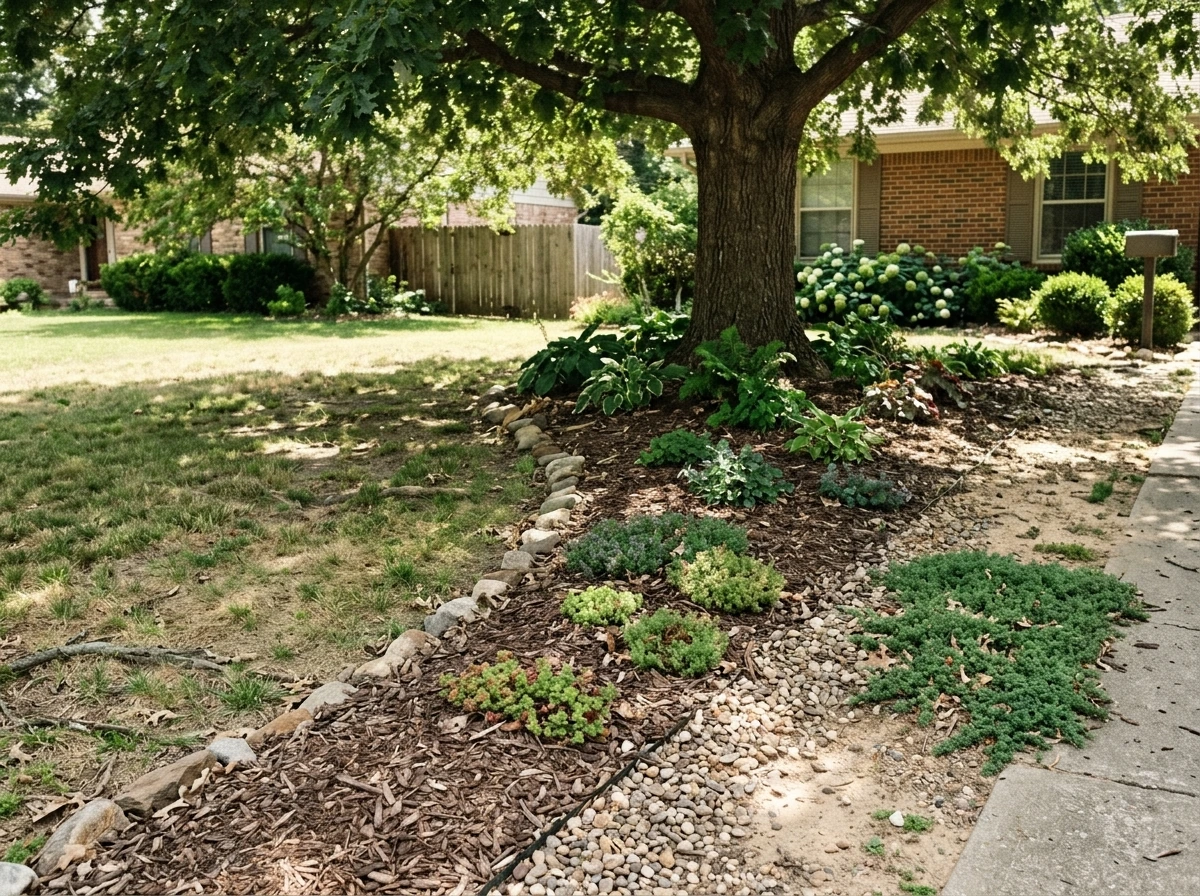
If your soil is already draining too fast and struggling to hold nutrients, adding more sand is the last thing you need. In this case, organic matter (compost) is almost always the right amendment. Sand alone won't fix fertility, and piling it on a thin, nutrient-depleted soil will make it harder for grass to establish and survive.
Using sand instead of solving the real problem
Penn State Extension lists drought, heavy shade, extreme soil acidity, pest damage, and thatch as common reasons grass fails to establish or grow. Sand doesn't fix any of those. If your grass isn't growing because the pH is way off, because a tree is blocking light, or because grubs are eating the roots, adding sand is just a distraction from the actual fix.
How to Put Sand on Grass the Right Way
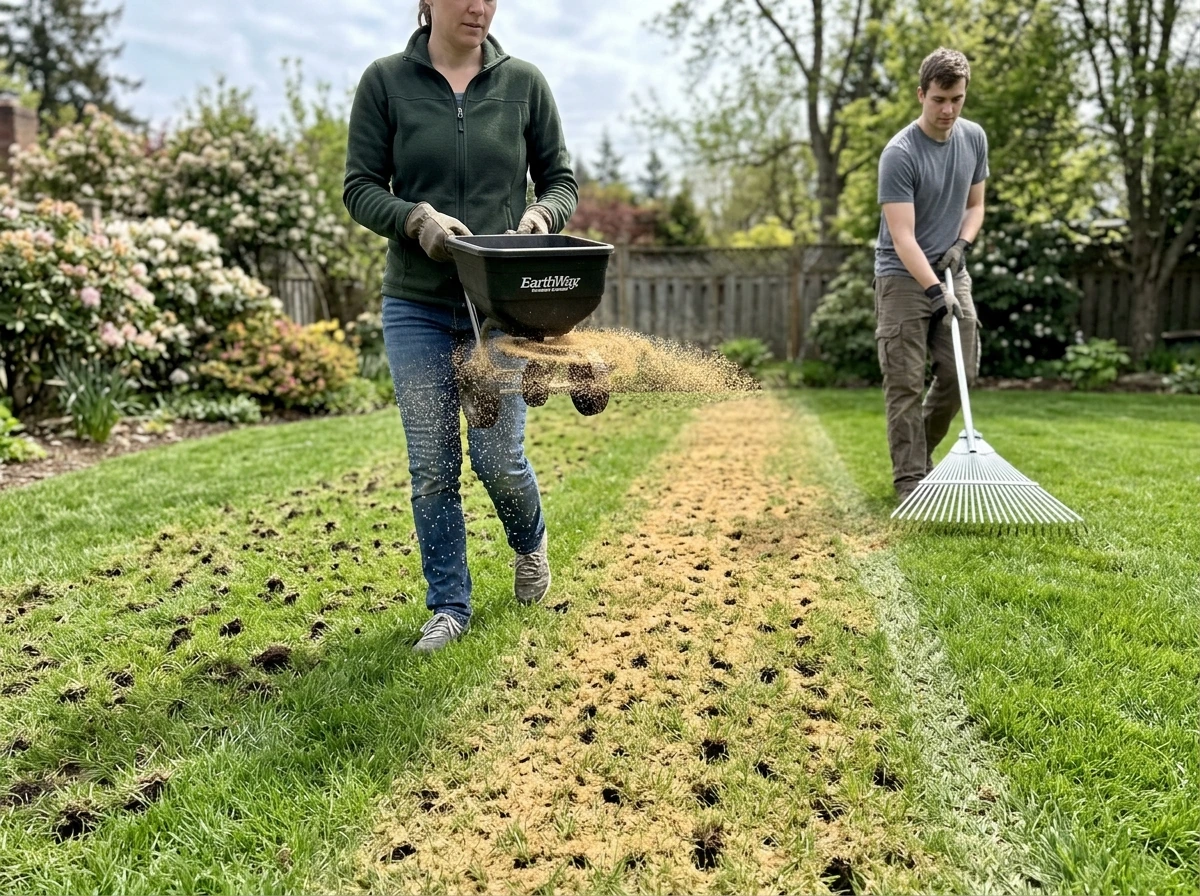
The method matters as much as the material. Here's a practical step-by-step approach based on what actually works for home lawn situations.
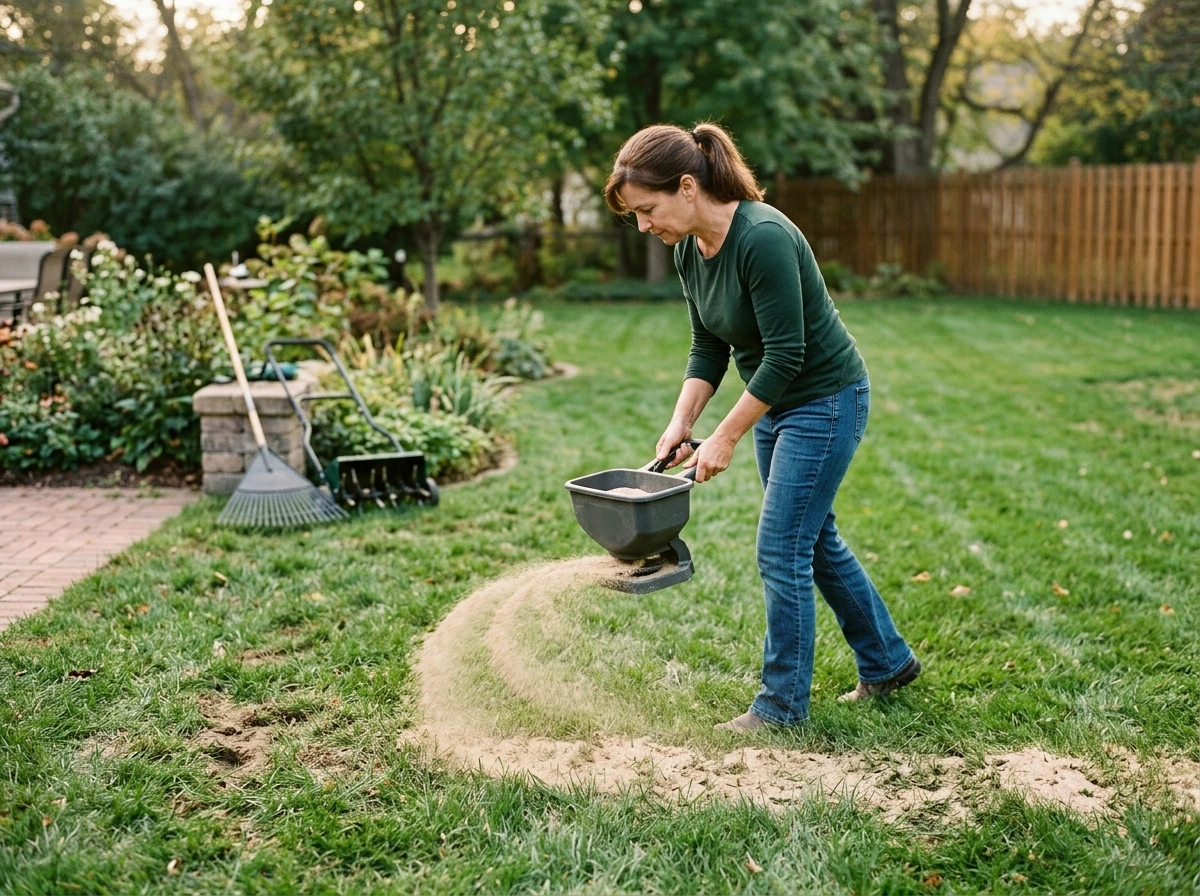
- Aerate first. Core aeration before topdressing is the difference between sand that does something and sand that just sits there. When you pull cores, you create channels for the sand to filter into the root zone. Without aeration, most of the sand stays at the surface and provides little benefit to the profile below.
- Use the right sand. Choose a coarse or medium-grade horticultural or masonry sand. Avoid play sand (too fine) and avoid anything dramatically finer than your existing soil. If you're not sure, call a local turf supplier and describe your soil type. They'll know what works in your region.
- Apply thin layers only. For home lawns, keep each application to no more than half an inch. Clemson's guidance is firm on this. Cornell's sports-field program recommends building up gradually with quarter-inch applications per session, targeting a cumulative depth of about three-quarters to one inch over time. Think of it as a slow build, not a one-time fix.
- Work the sand in. After spreading, use a drag mat, a lawn leveler, or even the back of a rake to work the sand down into the aeration holes and across the surface. Cornell's guidance specifically recommends the drag mat technique so the material filters into the holes rather than just sitting on top. Sand that stays on the surface doesn't improve the root zone.
- Water it in. A light watering helps settle the sand and gets it moving into the soil profile. It also protects any existing grass that got covered during application.
- Stay consistent. One application rarely transforms a lawn. This is a seasonal program, not a one-time treatment. Schedule it around your aeration timing, which for cool-season lawns is typically fall (and sometimes spring), and for warm-season grasses is late spring through summer.
Will Sand Help Grass Seed Germinate?
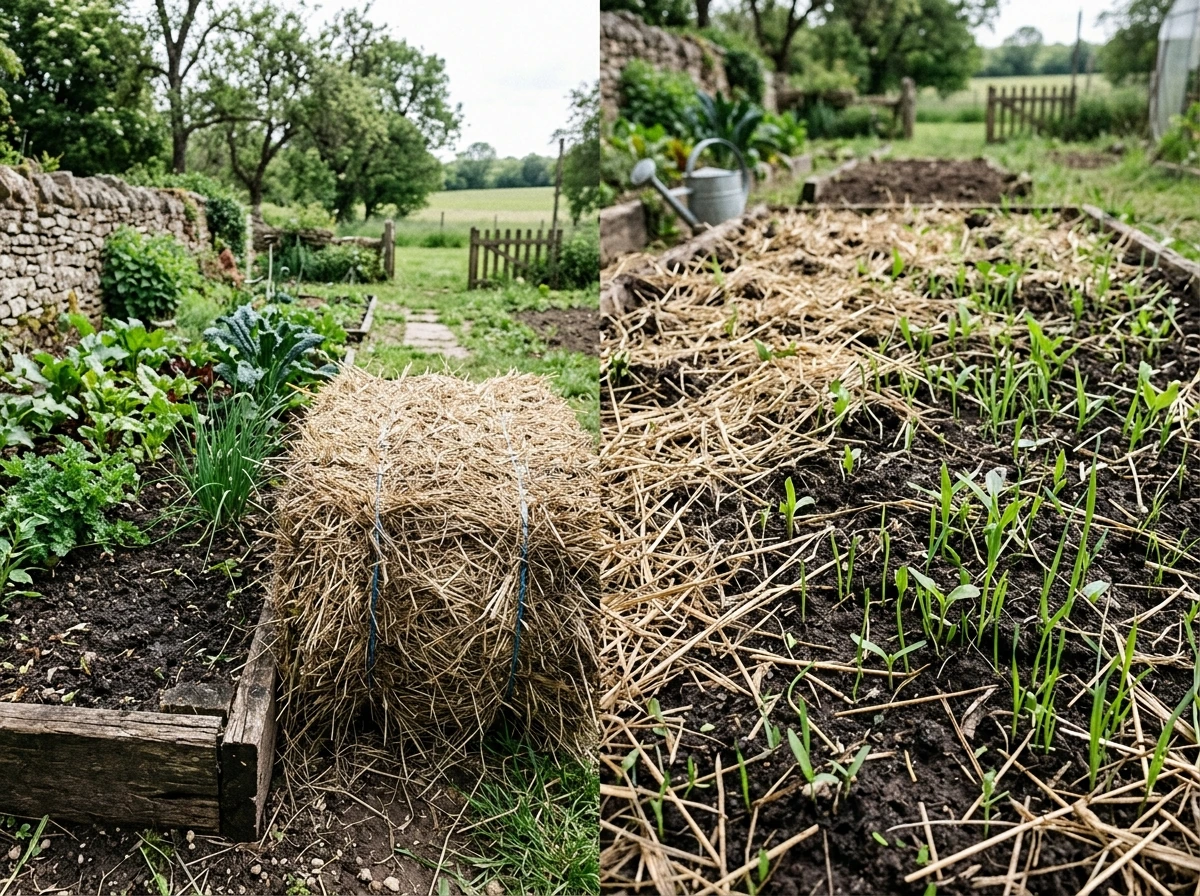
This is a separate and important question from topdressing an established lawn. When it comes to seed germination, sand is generally not helpful and can actively work against you, especially if you’re asking does hay grow grass. does hay grow grass. does sugar help grass grow
Grass seed needs close contact with moist soil to germinate. A layer of sand between the seed and the soil disrupts that contact, and because sand drains quickly, it dries out much faster than a soil seedbed. Penn State Extension notes that lack of adequate moisture is one of the most common reasons newly seeded areas fail, and sand speeds up that drying process. Iowa State University Extension also emphasizes that poor seed-to-soil contact is a primary cause of germination failure, recommending core aerators, vertical mowers, or slit seeders specifically to ensure seed gets into the soil rather than sitting on top of it.
If you're overseeding, a thin topdressing of compost or screened topsoil (about one-eighth inch) does a better job than sand. It holds moisture, provides a little nutrition to the seedling, and keeps the seed pressed against the soil surface. UMass Extension's best management practices for lawn establishment specifically recommend topdressing with topsoil or compost rather than plain sand when overseeding. If you're doing a full renovation and starting from bare soil that's heavily sandy, you need to amend with organic matter before seeding, not after.
Sand vs. Other Topdressing Options
Sand isn't your only option, and in many home lawn situations, it's not even the best one. Here's how the common choices compare.
| Material | Best Use | Drainage Effect | Nutrient Value | Risk Level |
|---|
| Coarse Sand | Clay soil leveling, compaction, high-traffic areas | Improves significantly | None | Medium (particle size mismatch can cause layering) |
| Play Sand | Sandboxes (not lawns) | Can worsen drainage if layered | None | High (too fine, causes impermeable layers) |
| Compost | Nutrient-poor soil, seeding, sandy soil | Modest improvement | High | Low |
| Screened Topsoil | Filling low spots, overseeding | Neutral to slight improvement | Moderate | Low |
| Sand + Compost Mix | General topdressing, most home lawn situations | Good improvement | Moderate | Low to medium |
For most home lawns, a 50/50 mix of coarse sand and compost is the most forgiving topdressing option. You get the drainage and structural benefits of sand without stripping out all the biology and nutrient-holding capacity. It's the approach I'd recommend to most homeowners who aren't dealing with a severe, chronic drainage problem that needs straight sand correction.
Grass Still Won't Grow After Adding Sand? Here's What to Check
If you've applied sand and your grass still looks thin, patchy, or just isn't establishing, here's a practical troubleshooting checklist in order of likelihood.
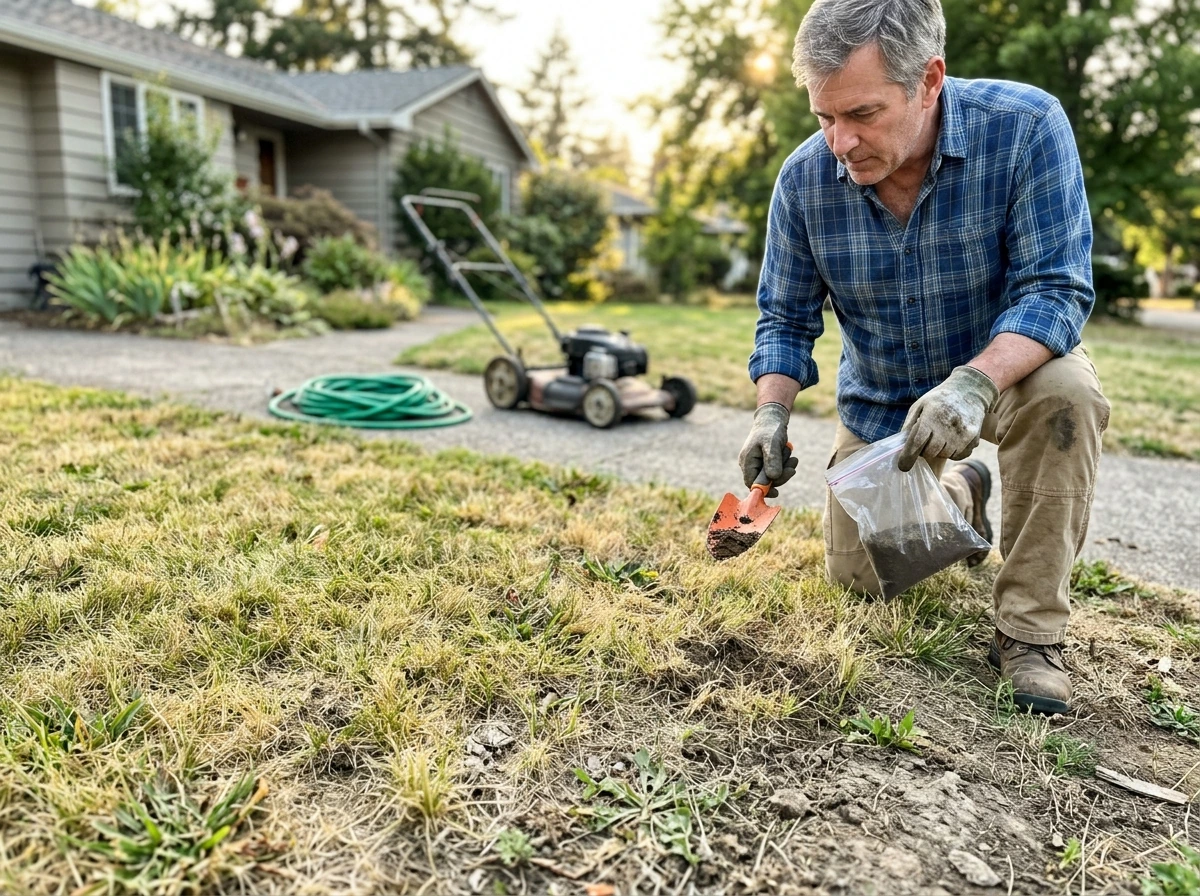
- Check your soil fertility and pH. Sand does nothing for nutrient levels. If your soil is acidic (pH below 6.0) or low in nitrogen, phosphorus, or potassium, grass simply won't thrive no matter how good your drainage is. Get a basic soil test from your local extension office. It costs almost nothing and tells you exactly what you're missing.
- Look at how thick your sand layer is. If you applied more than half an inch at once, the grass underneath may be oxygen-starved. In that case, use a rake to thin out the layer and let some air back in. Going forward, keep individual applications light.
- Assess seed-to-soil contact if you're trying to establish new grass. If seed is sitting on top of dry sand, it's not going to germinate reliably. Rake the area gently, water daily, and consider whether a slit seeder or core aerator would have been the better tool for getting seed into the ground.
- Evaluate your irrigation. Sand drains fast. If you're relying on rainfall alone in a dry stretch, a newly seeded or topdressed sandy area may be drying out before roots can establish. Daily light watering is often necessary during establishment, especially in warm weather.
- Rule out shade, thatch, and pests. If the struggling area is under a tree canopy, sand won't solve a light problem. If thatch is deeper than about three-quarters of an inch, it's acting as a barrier between your soil and everything you're trying to do on the surface. And if you notice irregular dead patches with the turf pulling up easily, check for grubs before doing anything else.
- Consider whether organic matter is what you actually need. If your soil already drains well but grass is thin and pale, compost is almost certainly a better amendment than more sand. It improves soil biology, feeds the grass, and holds moisture. A thin quarter-inch topdress of quality compost in the right season can outperform multiple sand applications on most home lawns.
- Check your seed if you went that route. Old seed, seed stored in hot conditions, or seed that was the wrong variety for your climate or shade level will fail regardless of soil preparation. Illinois Extension notes that seed viability is a common and overlooked reason for poor germination.
If you've worked through that list and you're still stuck, you're likely dealing with a combination of factors rather than one simple fix. That's where a soil test becomes essential, because it removes the guesswork and tells you exactly what your soil is missing. Sand can be a useful part of the solution, but it rarely works alone, and it works best when you're already addressing drainage or compaction rather than trying to solve a nutrient or biology problem.